
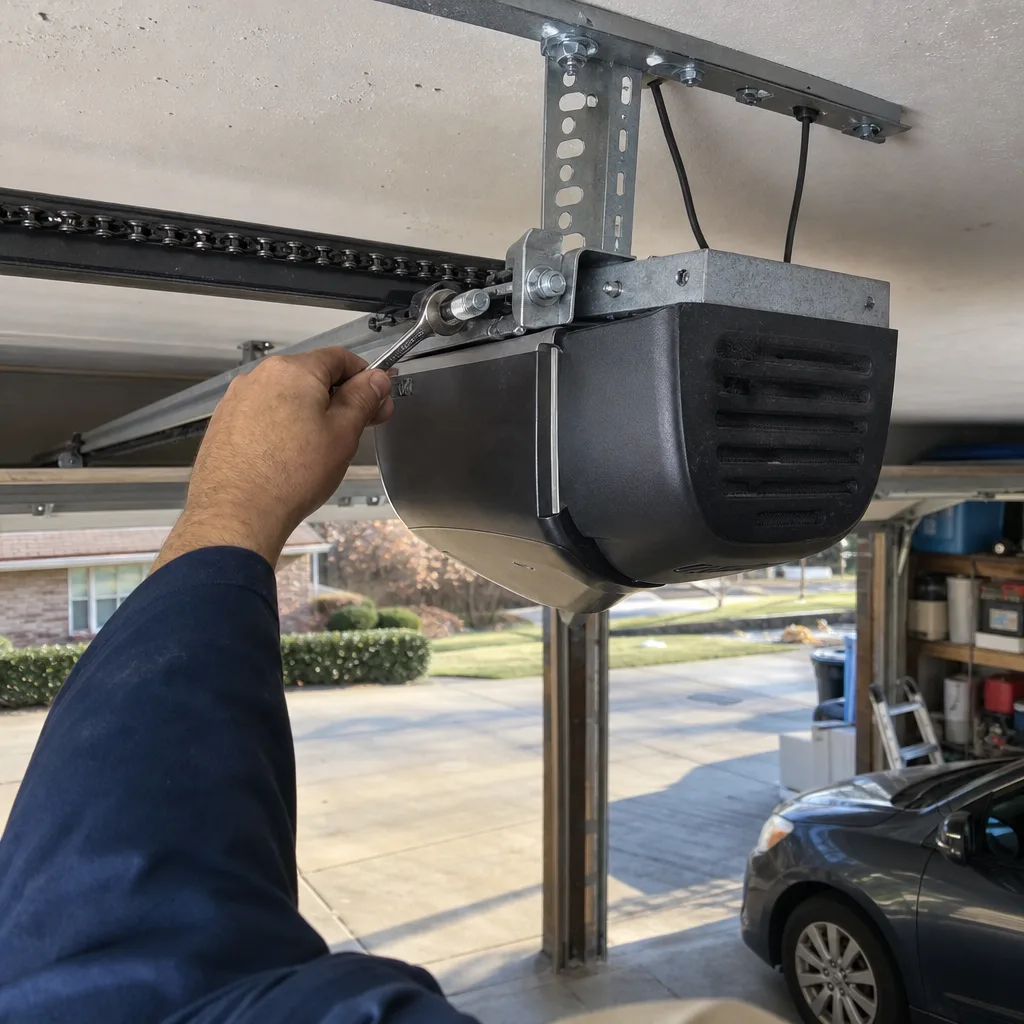
Last updated November 21, 2026
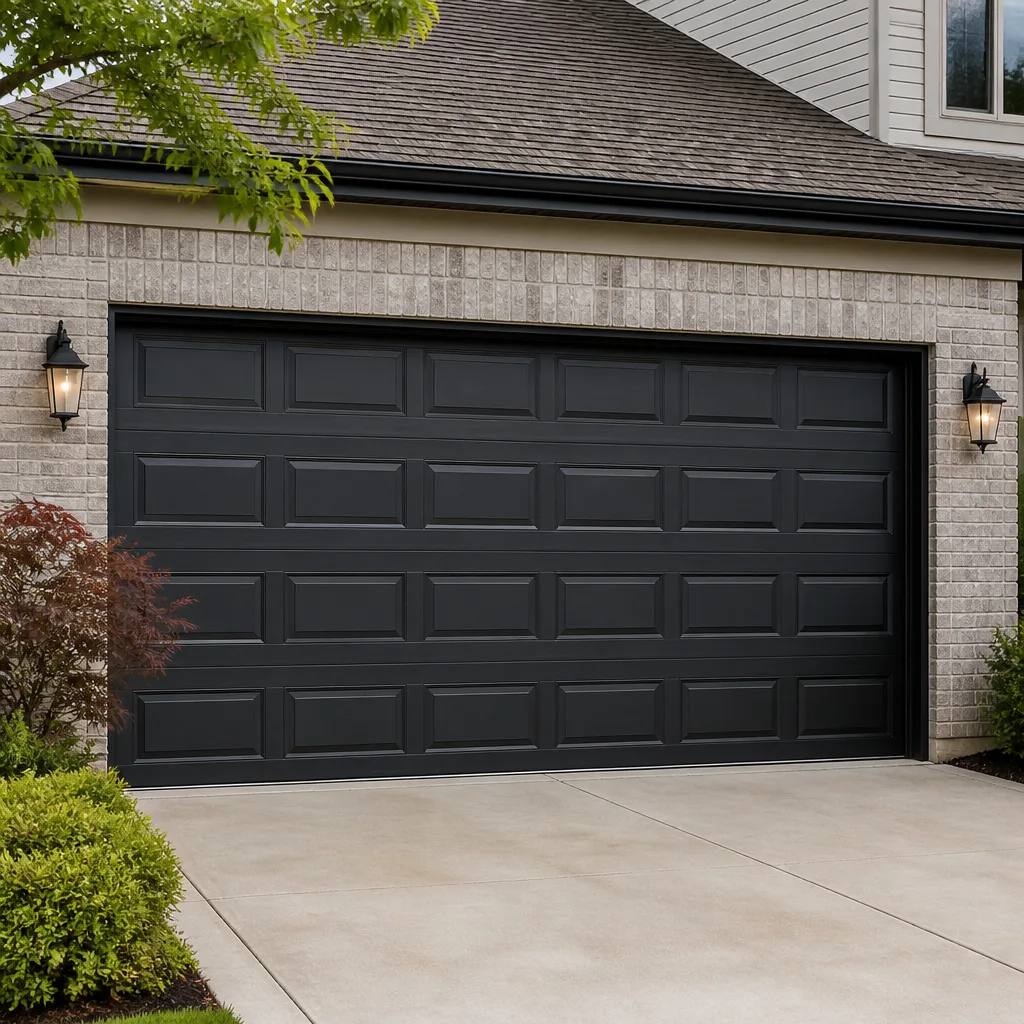 Raised-panel steel
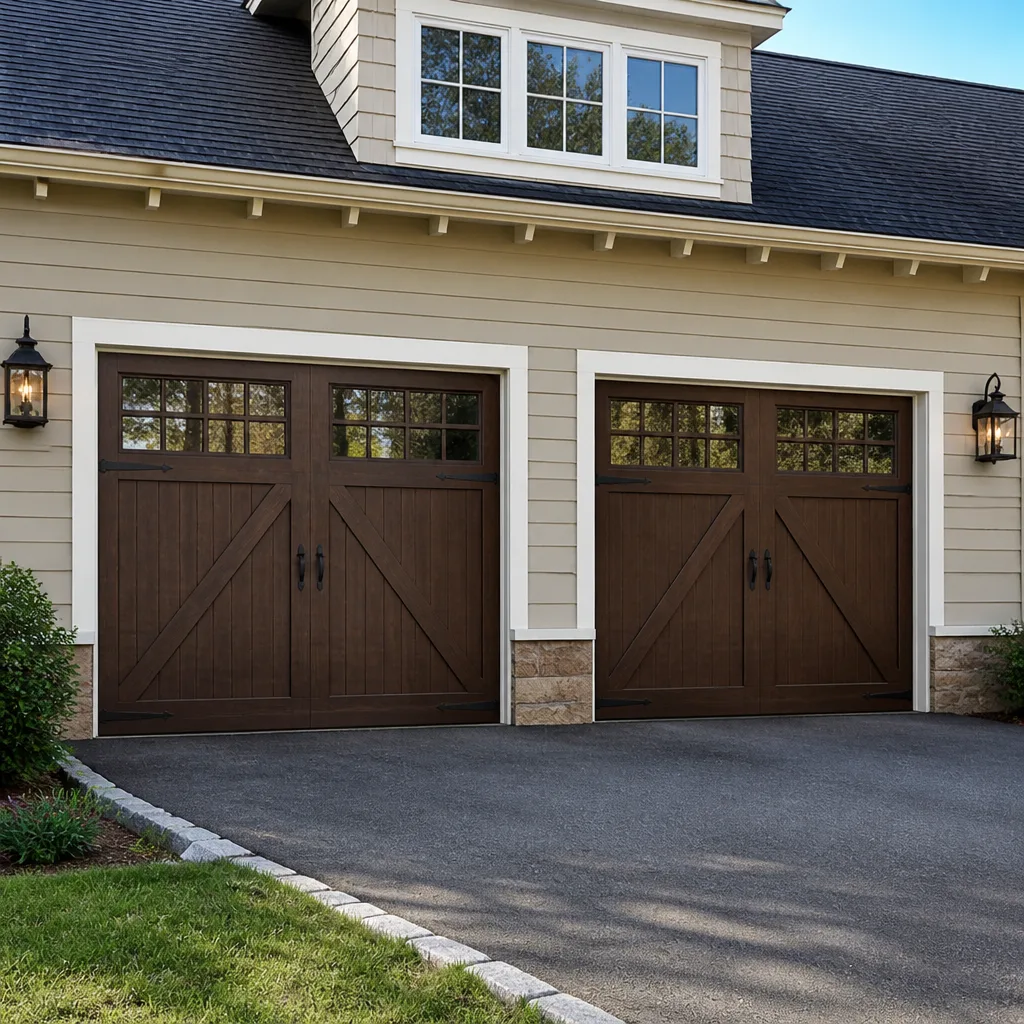 Carriage house
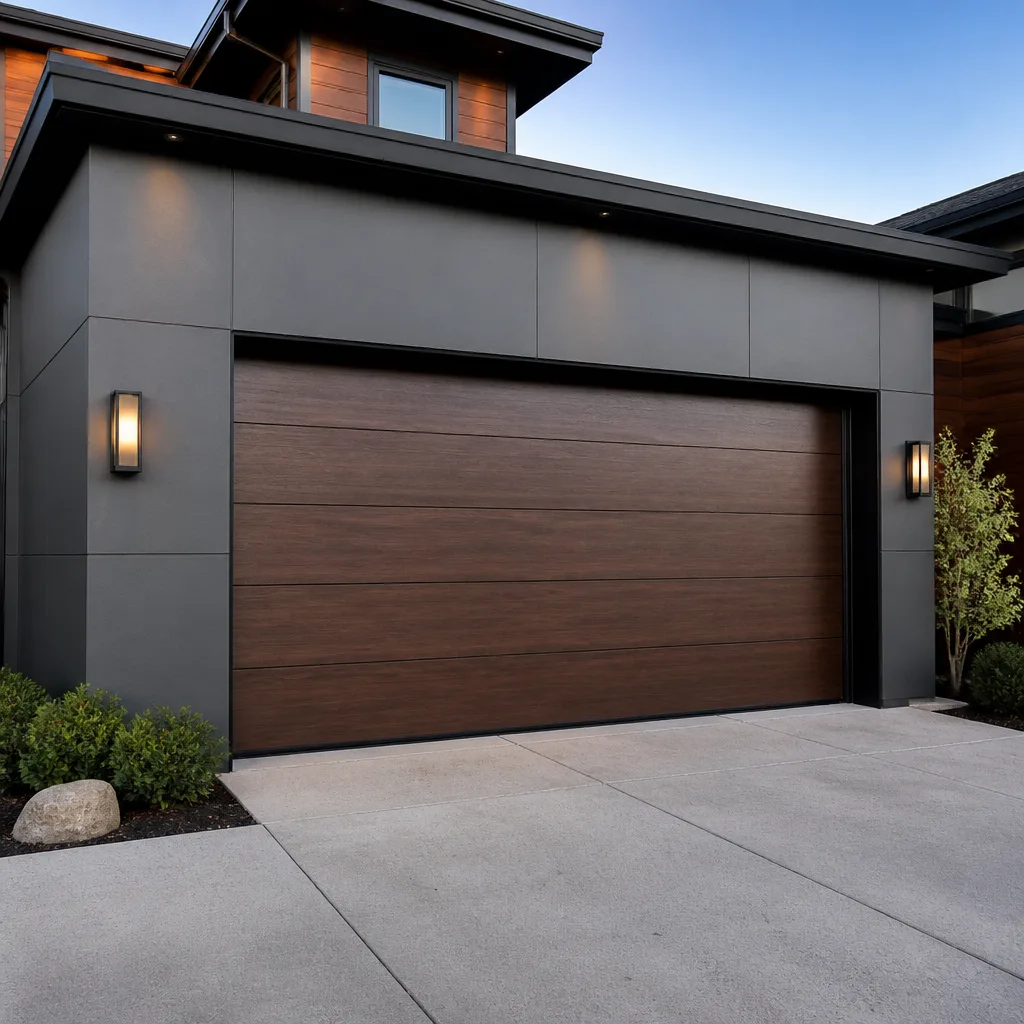 Modern flush
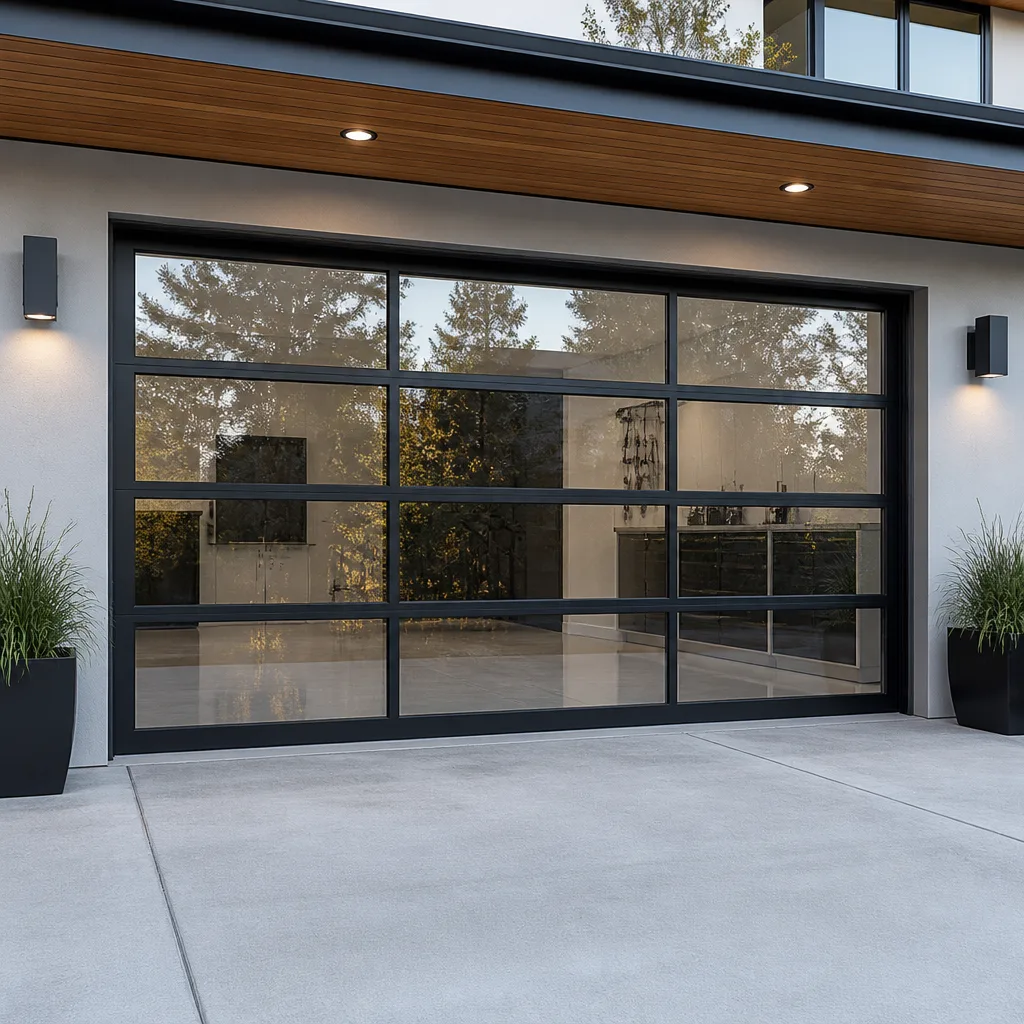 Full-view glass
 LiftMaster openers
 Chamberlain openers
Full 25-point door and opener safety check with every visit - springs, cables, rollers, tracks, and your LiftMaster or Chamberlain opener included
You get a price before we start. It does not change when the pro arrives.
Get your free estimateGarage Door Permits, Codes & Inspections in Lindenwood Park, MO: What You Need to Know
Most homeowners in Lindenwood Park assume a garage door swap is permit-free. Usually they’re right, and that’s exactly what makes the exceptions dangerous. A garage door replacement that changes the rough opening size, adds an operator where none existed, or alters the fire-separation wall between the garage and the house is not a simple swap under Missouri building code, and “I didn’t know” is not an exemption. This guide walks through where the line sits, what triggers City of St. Louis or Missouri building review, what an inspector actually looks at, and why unpermitted work tends to surface at the worst possible moment: closing day.
Quick Answer
A straight like-for-like garage door replacement in Lindenwood Park generally does not require a building permit, but work that changes the rough opening, adds a new automatic operator, alters the fire-separation wall between an attached garage and living space, or changes the door’s structural attachment usually does. The inspector’s focus is on structural anchorage, fire separation, and code-compliant operation. Ask the City of St. Louis building department to confirm your specific scope before work starts, because the final say belongs to them, not to any guide.
Styles & brands we work with
- Raised-panel steel
- Carriage house
- Modern flush
- Full-view glass
- LiftMaster openers
- Chamberlain openers
Table of Contents
- What Actually Triggers a Permit for Garage Door Work
- Fire Separation and Lindenwood Park’s Attached Garages
- What an Inspector Checks: Rough-In vs. Final
- How Unpermitted Garage Door Work Surfaces at a Home Sale
- Missouri Energy Code and Insulated Door Replacements
- How to Hire for Permit-Aware Work in Lindenwood Park
- Common Mistakes to Avoid
- When to Call a Professional
What Actually Triggers a Permit for Garage Door Work
The line is not about the door itself. It’s about what the door is attached to and what changes around it. Swapping one 16-foot door for another 16-foot door of similar weight, in the same opening, with the same hardware pattern, is routine maintenance in most jurisdictions. Garage Door Repair Lindenwood Park sees that work daily, and it rarely needs paperwork. The trouble starts when the scope creeps past a like-for-like swap.
Here are the threshold conditions that typically push a job from routine maintenance into permit territory in St. Louis city and the surrounding code environment:
- Rough opening changes. Widening, narrowing, or raising the framed opening to fit a different door size alters the structure of the wall. That’s a framing change, and framing changes get reviewed.
- New automatic operator where none existed. Adding an opener to a door that was manual introduces electrical work at the outlet and a code-recognized safety system (the photo-eye and reversing mechanism). That electrical scope generally needs a permit, separate from the door itself.
- Header or load-path modifications. If the door’s overhead header has to be replaced or reinforced to carry a heavier door, the work touches the structural frame.
- Fire-separation wall alterations. Any change that pierces, weakens, or reworks the wall between an attached garage and the house triggers review. This is the item homeowners miss most often.
- Garage conversion or enclosure. Turning a drive-through garage into living space is a major permit project in every direction, and the door opening becomes a wall.
One important caveat: local enforcement varies, and a city inspector may classify a job differently than a neighbor’s inspector did last year. The only reliable answer for your address is the one you get from the City of St. Louis building department when you describe the exact scope. Call them before you sign a contract, not after.
If your existing door is simply failing and you want it diagnosed first, our garage door repair team can tell you whether your situation is a swap or something bigger.
Fire Separation and Lindenwood Park’s Attached Garages
Lindenwood Park’s housing stock is dominated by brick bungalows and two-story homes, and many of them have an attached or semi-attached garage tucked under the second floor or sharing a wall with the kitchen. That layout is exactly where fire-separation rules matter, and it’s the reason a garage door job here can get more complicated than it looks.
Under model codes adopted widely across Missouri, the wall between an attached garage and a residence must resist the spread of fire for a defined period, and the door leading from the garage into the house must be fire-rated and self-closing. The vehicle door at the front of the garage is a different component with its own requirements. What matters for a permit review is this: any work that alters the fire-rated assembly between the garage and the living space, or that opens the garage ceiling to the house above, can affect that separation.
In practice, a few things trip up Lindenwood Park homeowners:
- Overhead door tracks bolted into a fire-rated ceiling. If the ceiling above the garage is also the floor structure of the house, fasteners for the door’s track and spring system may need to be protected or specified so they don’t compromise the assembly. An inspector will look at this.
- Insulation added between the garage and the house. Adding insulation or finishing a garage wall can help or hurt depending on how it’s done, and a fire-rated wall cannot simply be covered over with a non-rated surface.
- Replacing the man-door. If you’re replacing the fire-rated entry door between garage and house at the same time as the overhead door, make sure the new one carries the rating. A solid-core interior door is not the same thing.
None of this is meant to scare you out of a project. It’s meant to tell you that in a bungalow-heavy neighborhood like Lindenwood Park, the conversation with your contractor and the city has to include the wall behind the door, not just the door.
What an Inspector Checks: Rough-In vs. Final
When a permit is issued, the inspection process comes in two phases, and they check different things. Understanding the difference keeps a job from stalling for a re-inspection.
Rough-In Inspection
The rough-in happens before the door is hung and before the wall is closed up. The inspector is looking at what will be hidden later:
- Framing and header. Is the opening framed correctly, sized correctly, and carrying the load as drawn?
- Fire-separation integrity. Are penetrations through the fire-rated wall sealed correctly? Are track and spring fasteners specified so they don’t compromise the assembly?
- Electrical rough-in for a new operator. If an opener is being added, the outlet and any wiring must be in place and accessible.
- Attachment points. Where the torsion bar, springs, and track will anchor, and to what.
Final Inspection
The final happens once the door is installed and operational:
- Safe operation. The door opens and closes smoothly, the balance is right, and the door does not bind or drift.
- Reversing and entrapment protection. If there’s an operator, the photo-eye and the reversing function must work.
- Clearances. Any required clearance between the door and the structure, and any required clearance for the operator’s release.
- Labeling and documentation. The installed product should carry the labels the code path requires.
- Final fire-separation check. The wall is intact, the fasteners are as specified, and the man-door is rated and self-closing if applicable.
In our experience in Lindenwood Park, the final inspection is where unpermitted shortcuts get caught. An inspector can look at an installed door and quickly tell whether the anchorage and the fire-separation were done to plan or improvised on site.
How Unpermitted Garage Door Work Surfaces at a Home Sale
Here’s the part that surprises people: unpermitted garage door work almost never causes a problem while you’re living in the house. It surfaces during a real estate transaction, usually after you’ve accepted an offer.
The path is predictable. A buyer’s inspector walks the property, notes a new overhead door, an opener, or an altered garage ceiling, and asks whether there’s a permit. Your title company runs a municipal records check. If the city has no record of a permit for the work, the question gets formalized. The buyer’s agent asks for proof. When there isn’t any, the deal often pauses until the scope is clarified and, if needed, brought into compliance.
- Disclosure. In Missouri, known material defects and unpermitted improvements typically must be disclosed to a buyer. An unpermitted garage door job is not a defect in the safety sense, but it’s a known condition the buyer will want documented.
- Remediation cost. Fixing unpermitted work usually means opening the wall or the ceiling to expose the framing for inspection, sometimes re-doing anchorage, and paying permit and inspection fees on top of the trades. The exact number depends on what was done and what an inspector requires to sign off, so we don’t quote a figure here. It is almost always more expensive than having pulled the permit up front.
- Timeline pressure. Remediation has to happen inside the closing window, which is rarely the right pace for a project that needs inspection scheduling.
The clean answer is to ask for the permit before work starts. If a contractor tells you a job clearly needs one and that you can skip it, that’s the moment to slow down. If you want an honest read on whether your existing door work needs paperwork, our Garage Door Repair Lindenwood Park page is the place to start.
Missouri Energy Code and Insulated Door Replacements
Insulated doors are common in Lindenwood Park, and with good reason: the neighborhood’s garages are often attached to the house, and an uninsulated door on a cold-weather garage pulls heat off the living space above or beside it. But energy code review adds a wrinkle most homeowners don’t expect.
Missouri’s statewide energy code, adopted through the Missouri Energy Code and applied locally by the City of St. Louis, includes provisions for the building envelope. When a door replacement is part of a larger project that touches the envelope, such as a garage conversion or an addition over a garage, the project can trigger review of the door’s insulation value as part of the envelope assembly. A replacement of a single failed door on a house that otherwise stays as-is typically doesn’t trigger a full energy review, but the classification depends on scope.
What we watch for when a customer is picking an insulated door:
- Whether the door is part of a bigger scope. A door swap is a door swap. A door swap that’s part of a garage conversion or an added living space gets reviewed as part of the envelope.
- The insulation value on the door’s label. Insulated garage doors carry an R-value printed on the product documentation. We don’t quote the R-value for a given product here, because it varies by model. Ask for the label before you buy.
- Air sealing around the perimeter. The best insulated door in the world loses its benefit if the perimeter isn’t sealed. The trim and threshold matter as much as the panel.
- Ventilation in the garage. An attached garage with gas appliances or stored fuel needs ventilation. Over-sealing while installing a new door can create a different problem.
If your project is a straight replacement, our garage door installation team can walk you through which insulation values and door types fit your garage and how the scope interacts with code review.
How to Hire for Permit-Aware Work in Lindenwood Park
Not every garage door contractor is set up to handle a job that needs a permit. Most residential garage door work is like-for-like and doesn’t need one, so the industry has drifted toward ignoring the cases that do. If your scope crosses the line, the contractor you hire needs to know the difference.
A few practical questions to ask before you sign:
- “Will this scope need a permit?” A competent contractor will tell you yes or no without hedging.
- “Who pulls the permit?” In most residential cases, the contractor pulls it on the homeowner’s behalf. If the answer is “you do,” that’s a red flag.
- “What changes at inspection?” A contractor who can describe the rough-in and final inspections has done this before.
- “What about the fire-separation wall?” If the answer doesn’t mention it, keep asking.
- “Which brands are you factory-familiar with?” A garage door specialist works on the brands in your home. We’re factory-familiar with Amarr, Wayne Dalton, Craftsman, Raynor, and four more, so the technician already knows your door before arriving.
The generalist handyman who offers “garage doors and a little bit of everything” is usually not the best choice when the scope gets into the fire-separation wall or the structural header. That’s the moment a real garage door specialist matters.
One more thing: the technician’s job is to install a code-compliant door. The final approval is the building department’s. If your contractor is willing to talk about permits in plain terms, you’re working with the right person. If they dodge the topic, the job will find a way to get expensive later.
Separately, if the opener is on your list, our garage door opener repair team can tell you whether a new operator needs its own electrical permit in your situation.
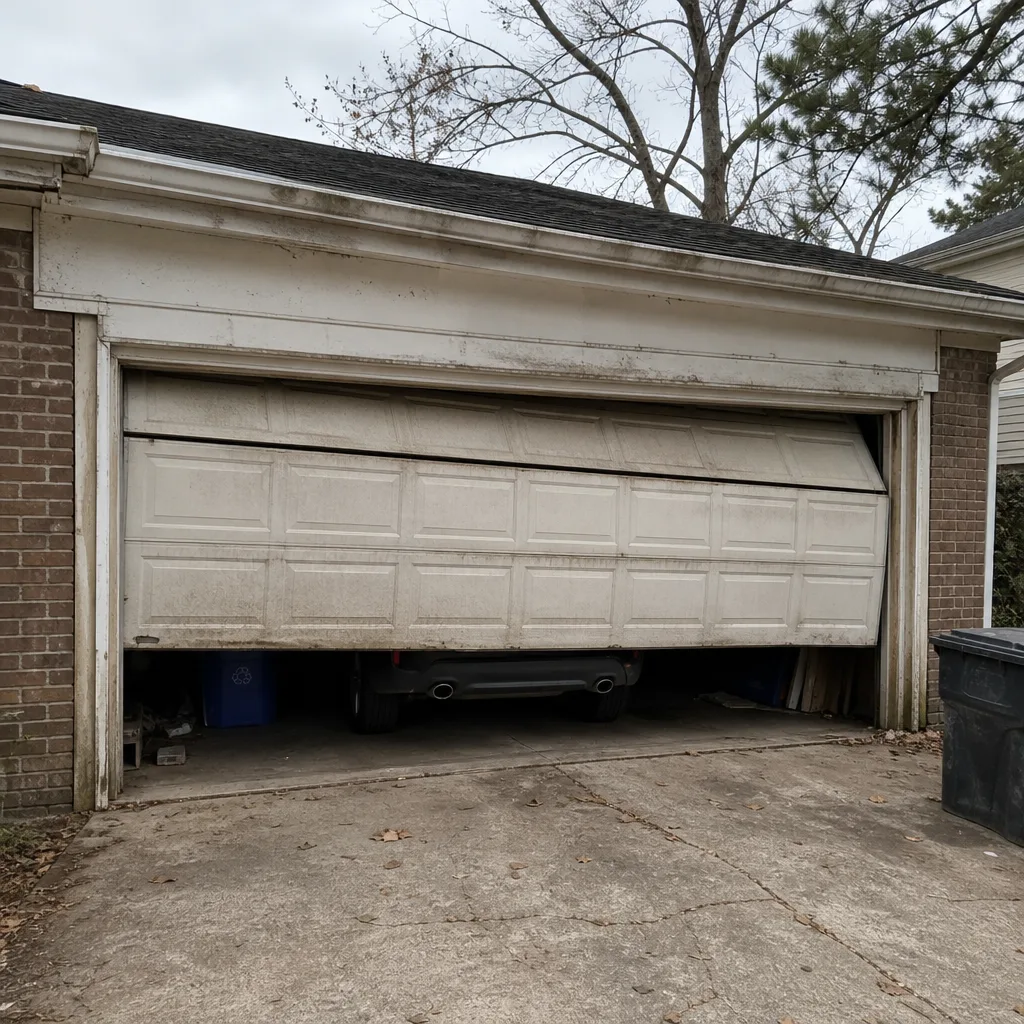
See the difference
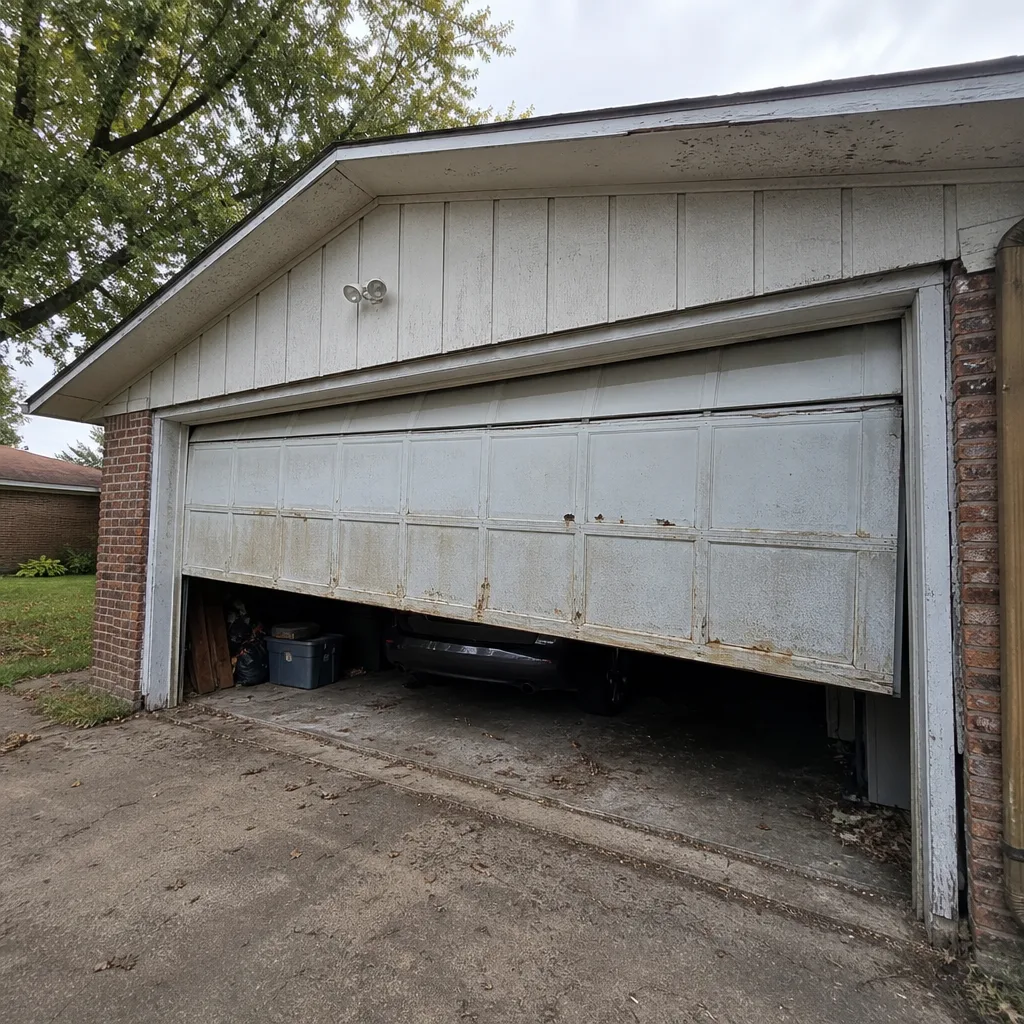 Before
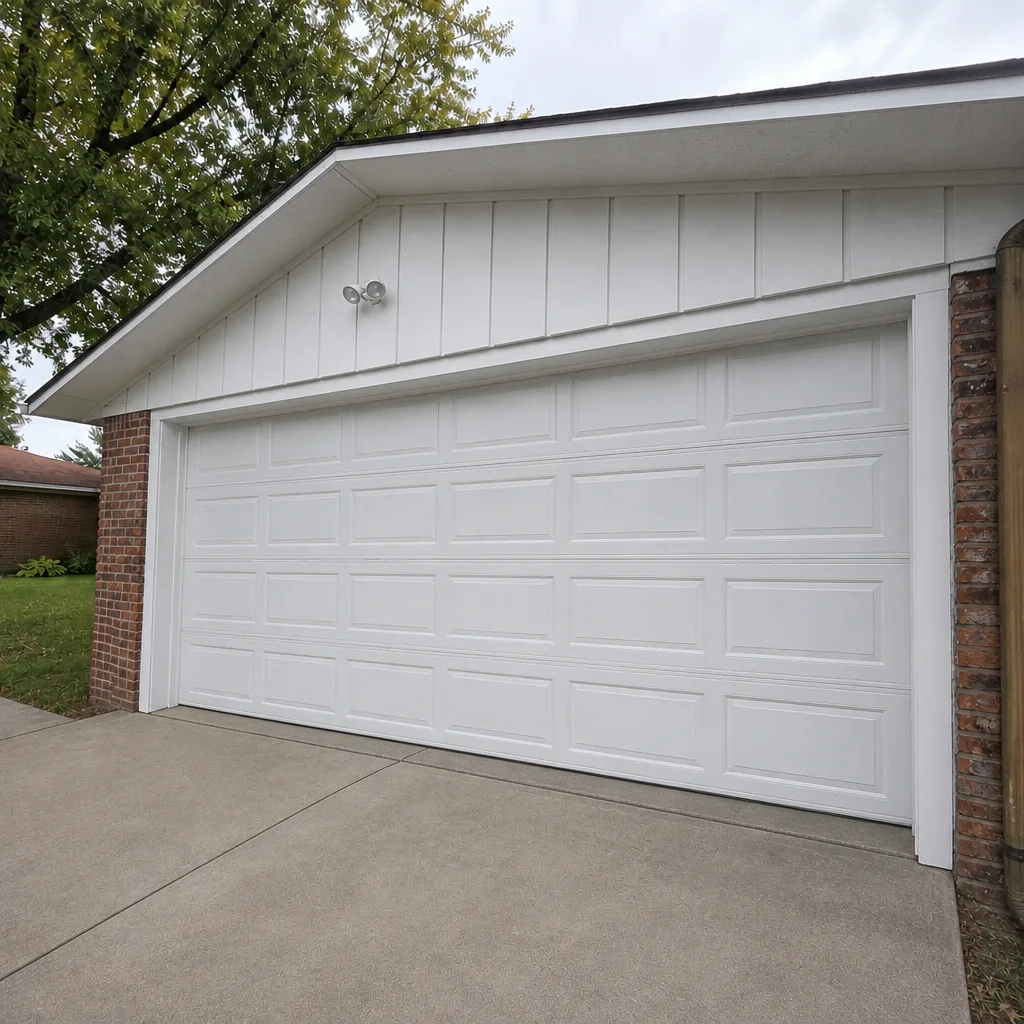 After
 Before
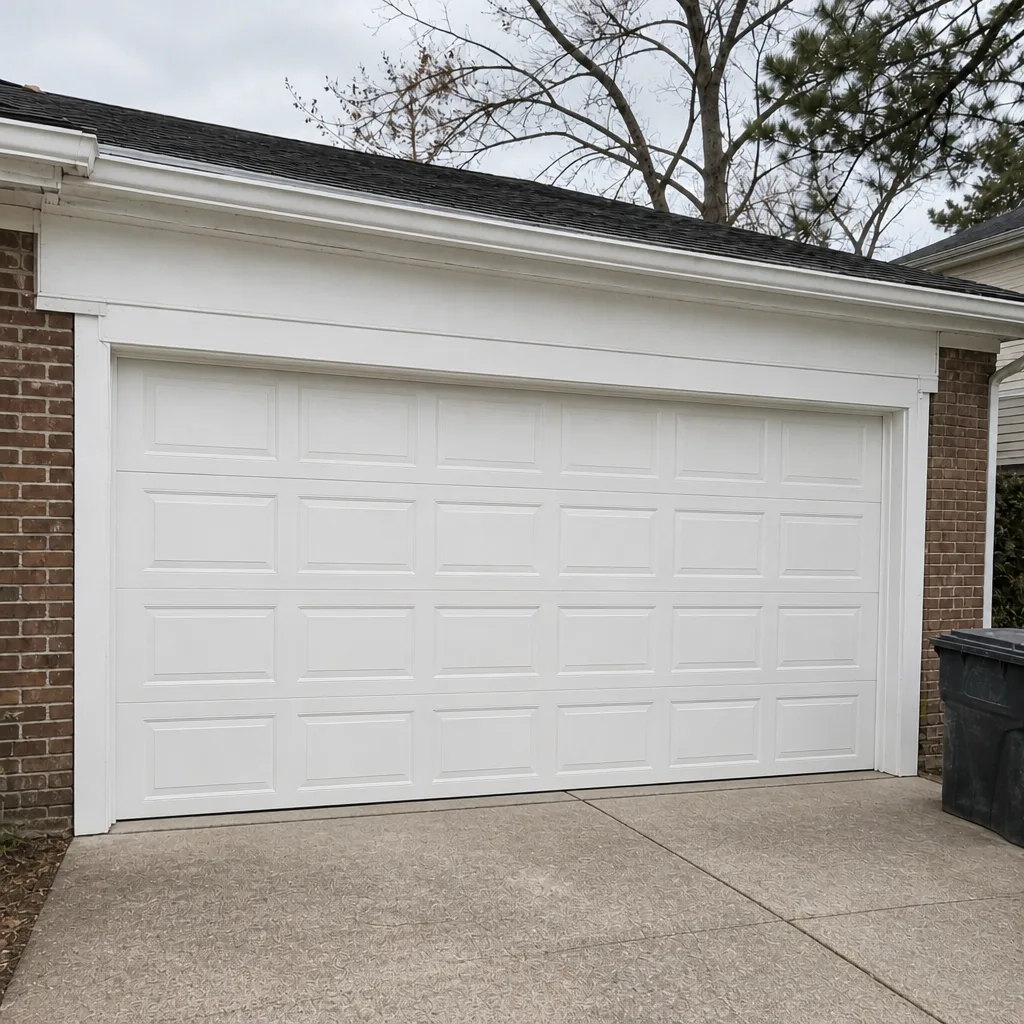 After
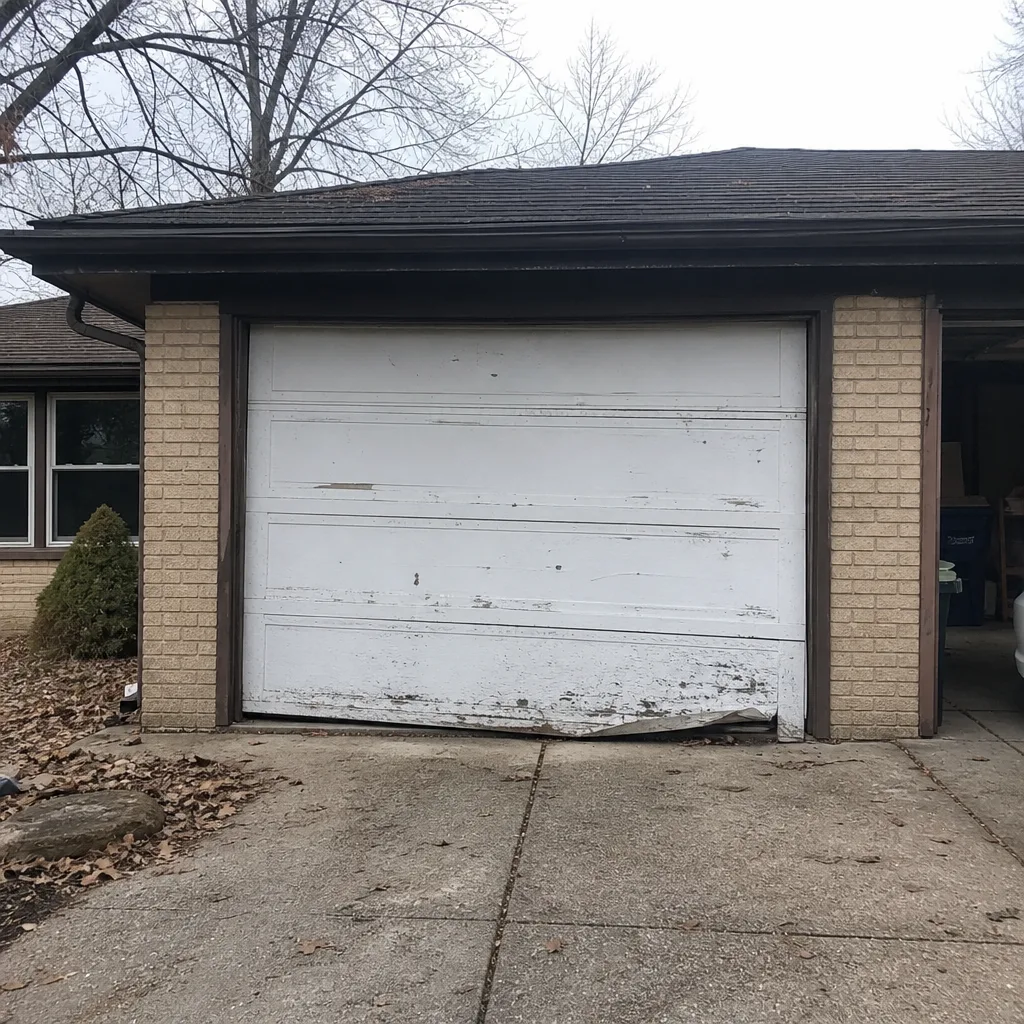 Before
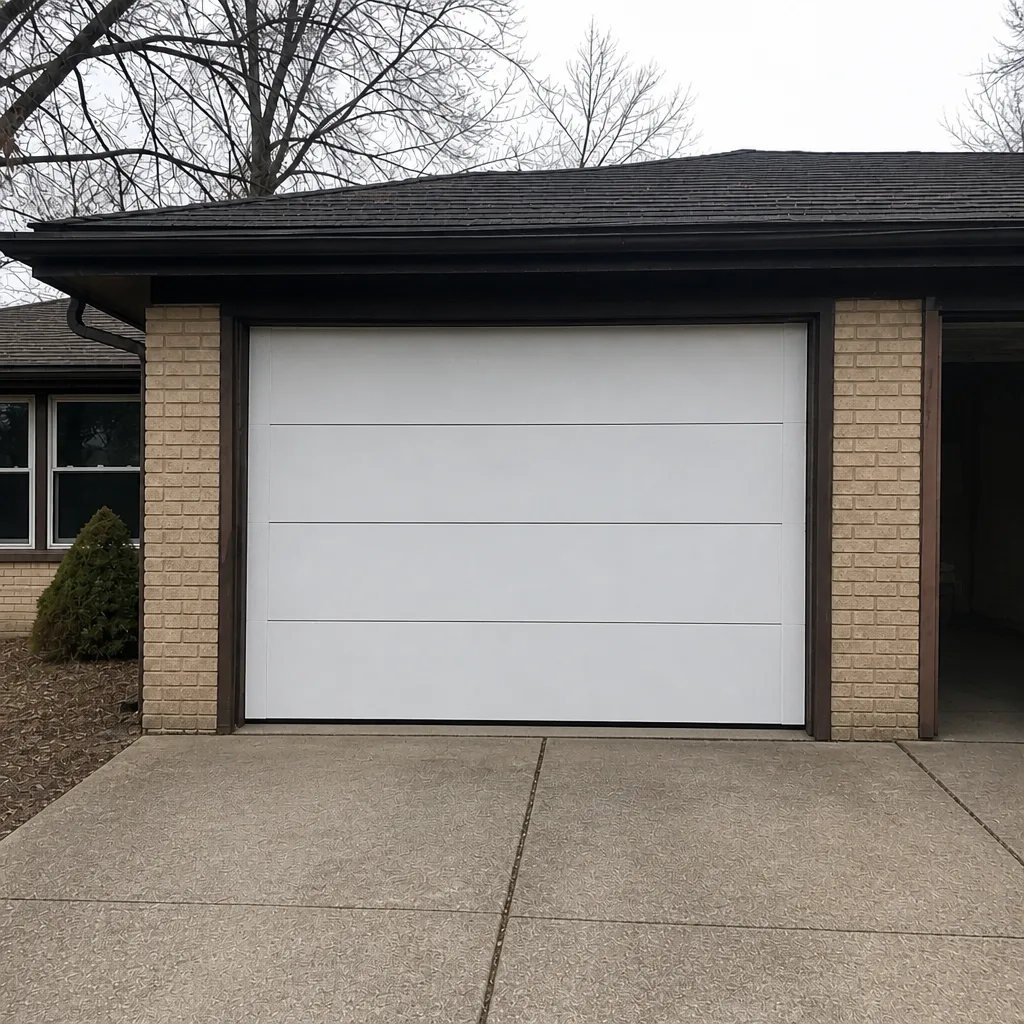 After
Common Mistakes to Avoid
- Assuming “same size door” means no permit. Same size door, same opening, same hardware pattern is usually fine. Same size door with a different weight class, new spring system, or modified anchorage can still need review. The city inspector is the one who decides.
- Calling the city and asking a vague question. “Do I need a permit to replace a garage door?” gets a vague answer. “I’m replacing a 16-by-7 door with a 16-by-7 door of the same weight in the same opening, no operator work, no framing changes” gets an accurate one. Describe the scope precisely.
- Adding a new opener and calling it “just wiring.” A new operator where none existed is an electrical addition. In St. Louis city, that’s a permit scope, and the electrical work has to be done and inspected properly.
- Ignoring the fire-separation wall in a bungalow. A lot of Lindenwood Park bungalows have the garage tucked under or beside the house. Track and spring fasteners go into whatever’s above, and whoever’s above may be fire-rated. Get this reviewed if the scope touches it.
- Watching the door go in without looking at the anchorage. The door itself is visible. The anchorage, and whether it was specified correctly, is hidden once the trim goes back on. Inspect before the job is closed up.
- Doing the work unpermitted “because the house is moving soon.” Unpermitted work surfaces during title and inspection, and remediation inside a closing window costs more than pulling a permit up front.
- Replacing a fire-rated man-door with a standard interior door. The door between the garage and the house is a fire component. A solid-core door from the home center is not the same product, and an inspector will catch it.
When to Call a Professional
There are a few specific points where calling a garage door specialist makes sense even if you’re a capable DIYer. When the scope touches the rough opening, the header, the fire-separation wall, or new electrical for an operator, the work is beyond a weekend project. When the door is a matched-pair torsion spring system, those springs are under extreme tension and are genuinely dangerous to handle without training; call a professional and don’t attempt it yourself. When you’re not sure whether a permit is required, call before you buy anything, because the answer changes which product you should buy. And when you’re prepping a home in Lindenwood Park for sale and there’s unpermitted work on record, call before closing day, not during.
Garage Door Repair Lindenwood Park offers free estimates in Lindenwood Park. We answer 24/7. Call (866) 566-2905.
Frequently Asked Questions
It depends on scope. A like-for-like replacement of a door in the same opening with the same hardware pattern generally doesn’t require a permit, while work that changes the rough opening, adds an operator, or alters the fire-separation wall usually does. Confirm your specific scope with the City of St. Louis building department before work starts. Call (866) 566-2905 for a free estimate on the installation itself.
The fire-separation wall between an attached garage and the living space is the most commonly missed trigger. Homeowners focus on the door and forget that the anchorage, the ceiling fasteners, and the man-door are all part of the code picture. In Lindenwood Park’s bungalows, this comes up more often than you’d think. Call (866) 566-2905 if you’re not sure whether your job touches it.
The rough-in inspection checks framing, header, fire-separation integrity, electrical for any new operator, and attachment points. The final inspection checks safe operation, reversing protection if there’s an operator, clearances, labeling, and the final fire-separation condition. An inspector can tell from the installed door alone whether the job was done to plan. Call (866) 566-2905 for a free estimate on getting it done right.
It shows up during the buyer’s inspection and the title company’s municipal records check, and it can pause the deal while the scope is clarified and remediated. Remediation often means opening the wall or ceiling to expose framing for inspection, plus permit and inspection fees on top of the trades. The exact cost depends on what was done, so the written estimate after inspection sets the price. Call (866) 566-2905 to talk through your situation.
A straight single-door replacement on a house that stays otherwise as-is typically doesn’t trigger a full energy code review, but a door replacement that’s part of a larger envelope project, such as a garage conversion or an addition over a garage, can. Ask the City of St. Louis building department to confirm for your scope, and check the R-value on the specific product’s label before you buy. Call (866) 566-2905 for a free estimate on the installation.
The local professionals we connect you with are licensed and insured as their state requires, and our own technicians have up to 15 years of experience. Garage door specialists, not generalist handymen, so the work is done to code by someone who understands what an inspector will look for. Call (866) 566-2905 for a free estimate. We answer 24/7. Fast dispatch from 7am to 7pm, Sunday through Friday.
The Bottom Line
Most garage door swaps in Lindenwood Park are simpler than they look. The exceptions are the ones that matter: rough opening changes, added operators, fire-separation wall work, and any job that turns a garage into living space. Get a precise scope in writing, ask the City of St. Louis building department to confirm whether a permit is needed, and don’t skip the permit because the house is moving soon. Unpermitted work surfaces at closing, not before. The written estimate sets the final price on the job itself, and the permit path is the cheapest one in the long run.
If you’re ready to talk through your scope, call (866) 566-2905 for a free estimate. We answer 24/7, with fast dispatch from 7am to 7pm, Sunday through Friday. If a call comes in outside that window, we’ll book it into the next opening. Same-day service is available for straightforward repairs.
Written by the team at Garage Door Repair Lindenwood Park.