
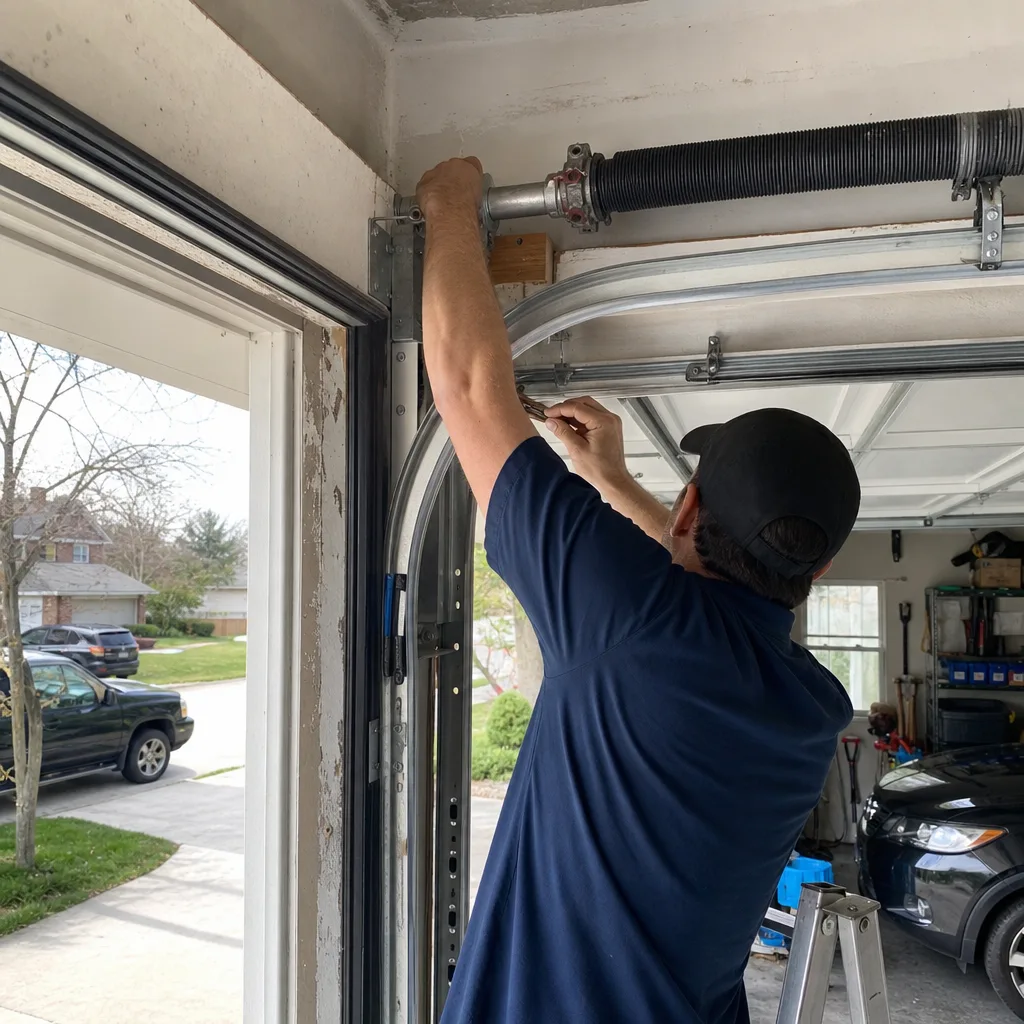
Last updated November 21, 2026
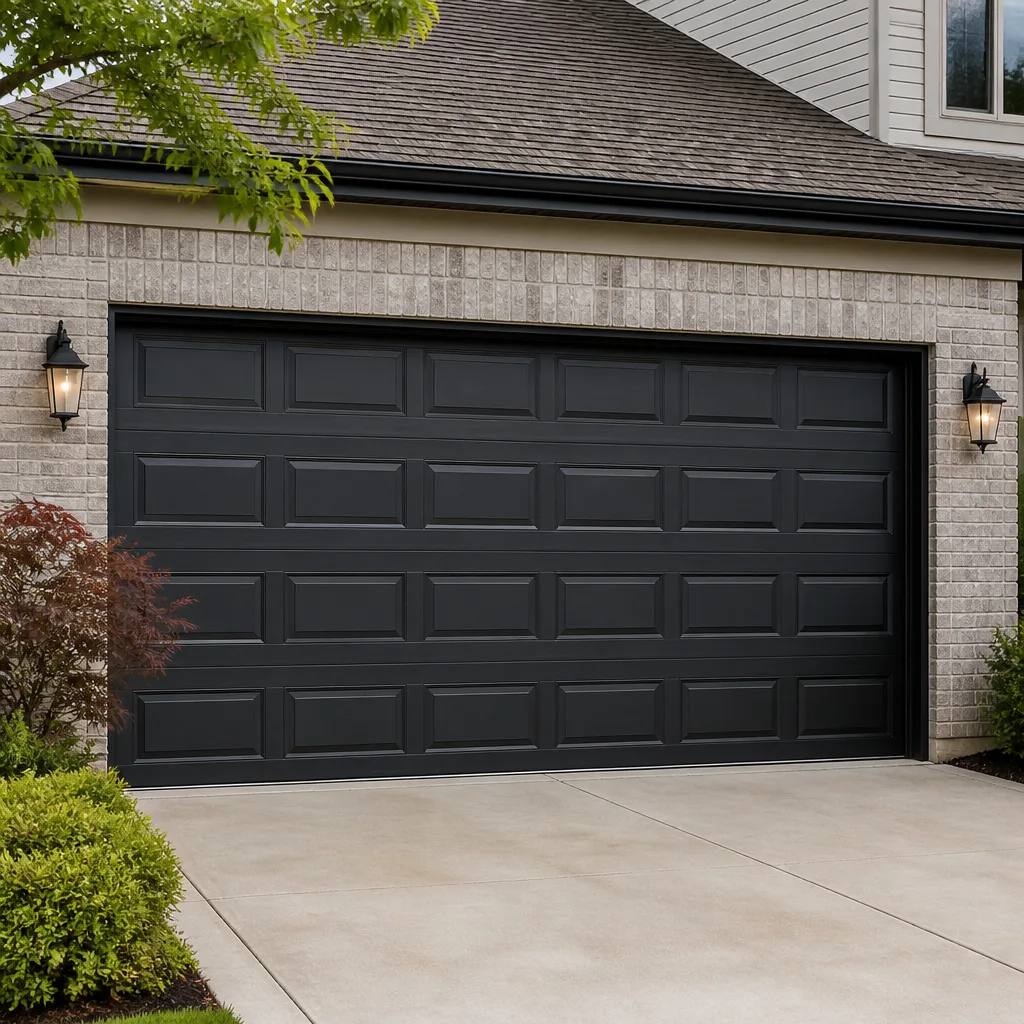 Raised-panel steel
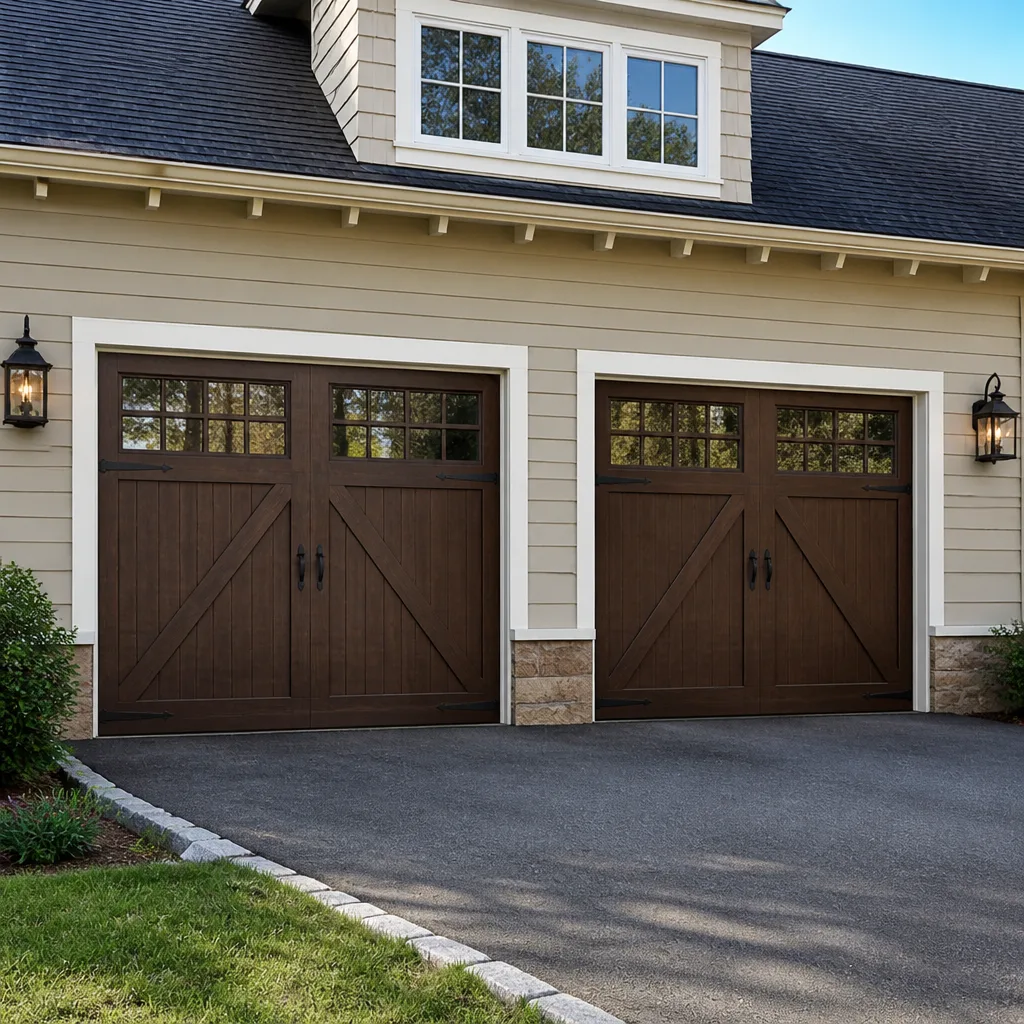 Carriage house
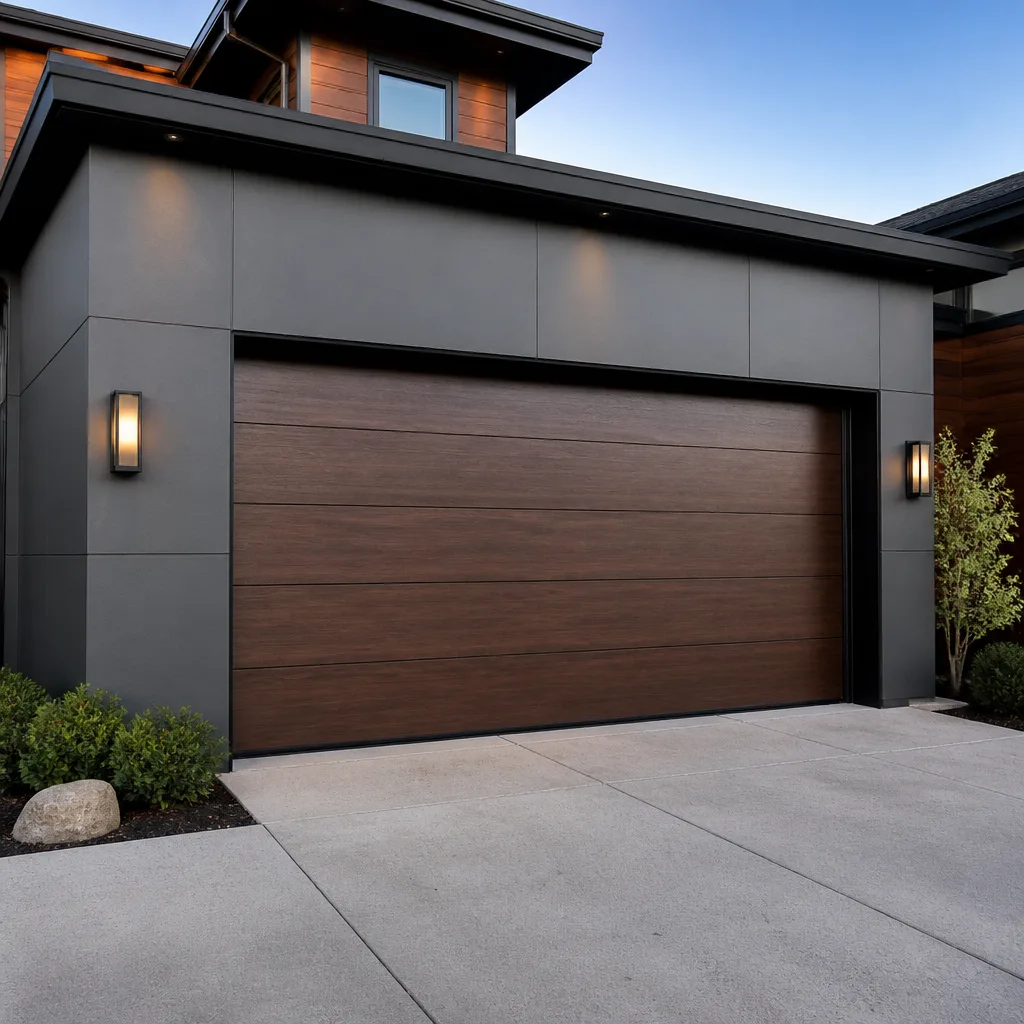 Modern flush
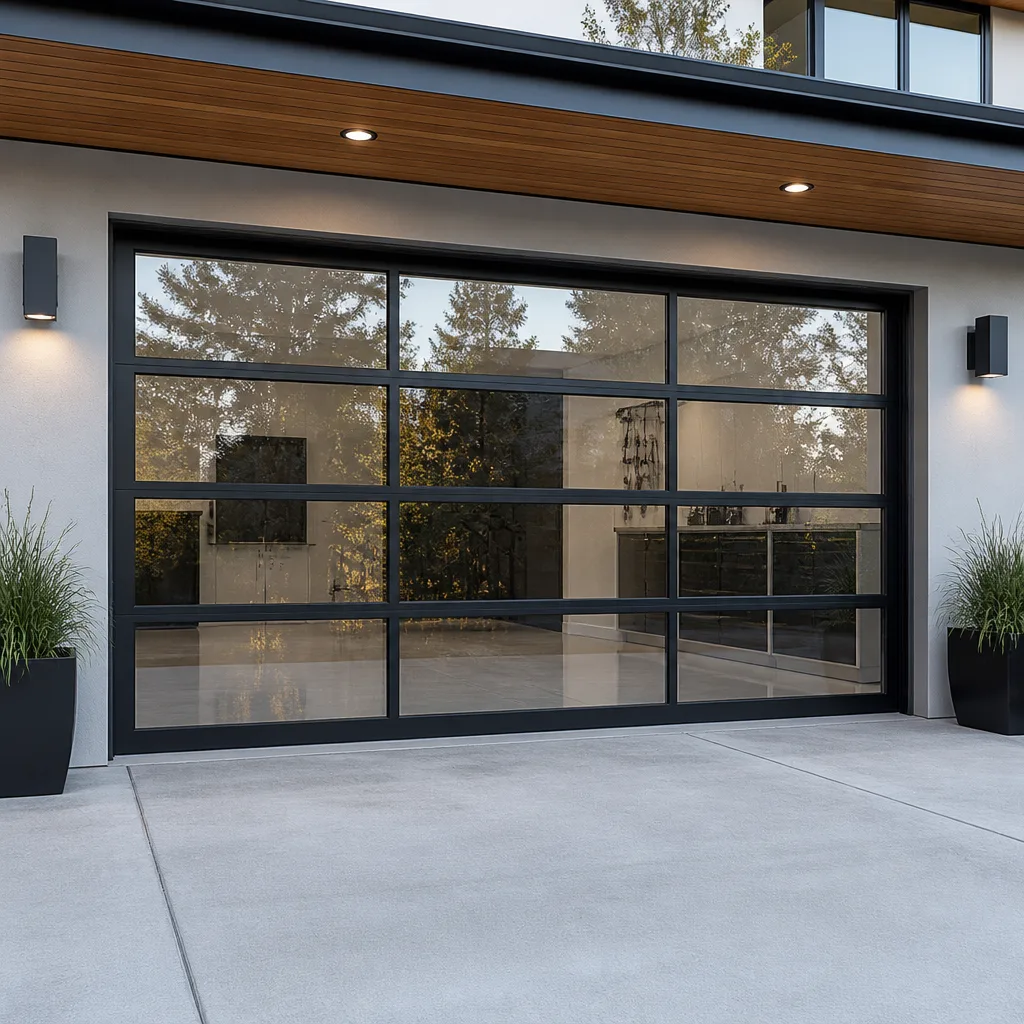 Full-view glass
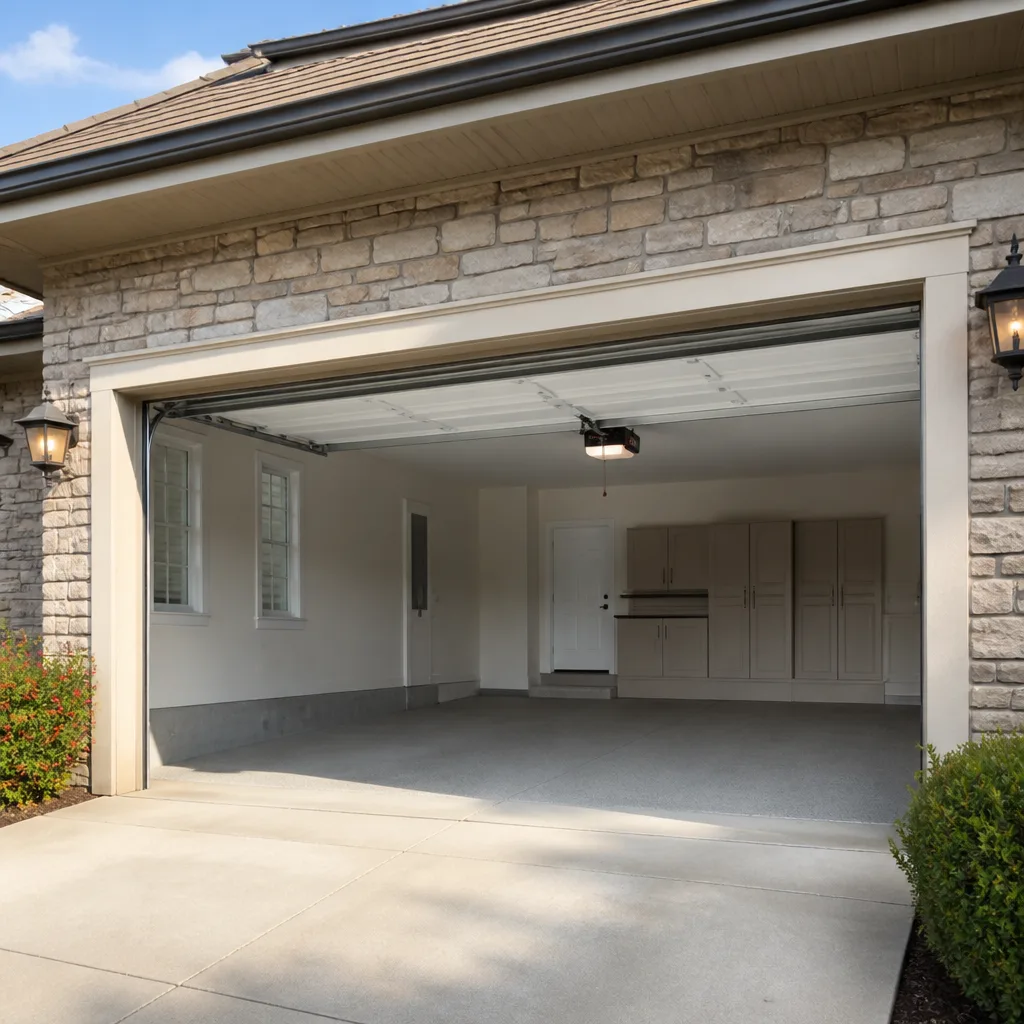 LiftMaster openers
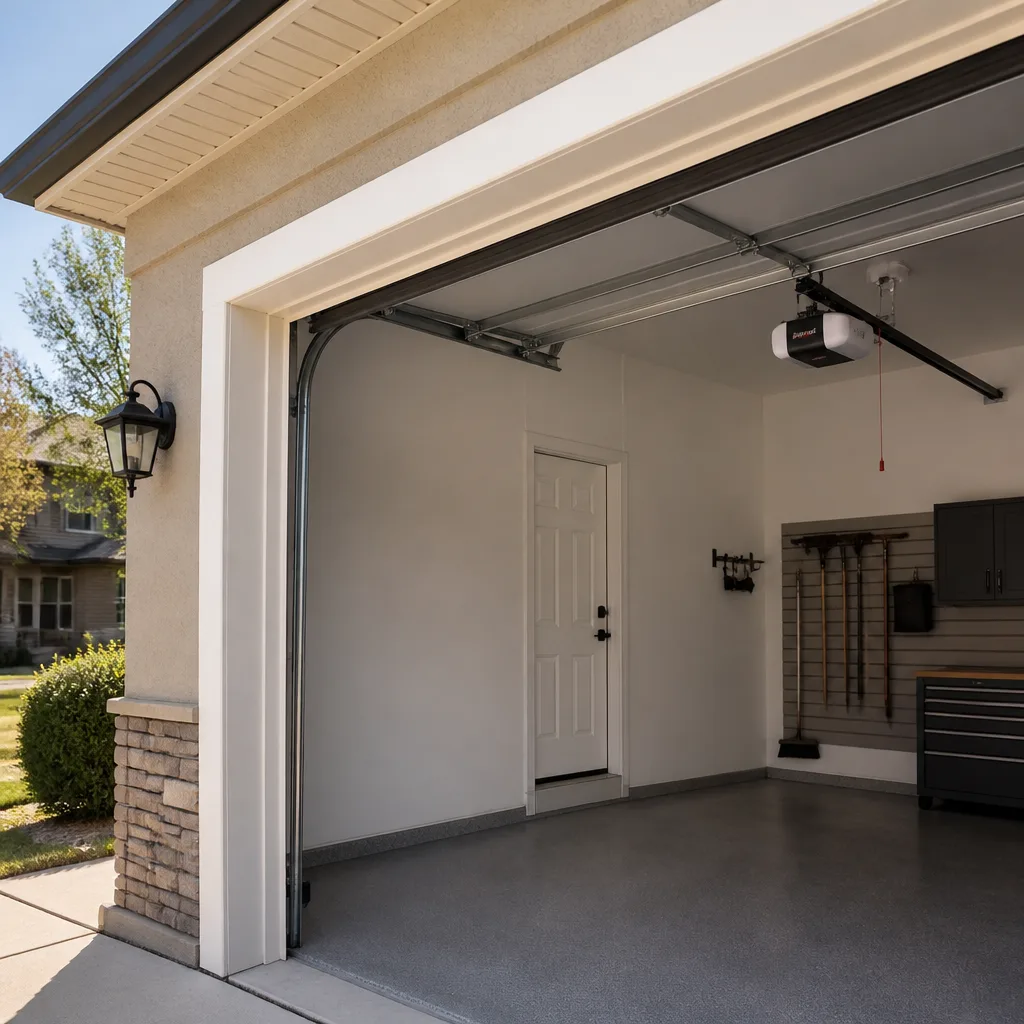 Chamberlain openers
Full 25-point door and opener safety check with every visit - springs, cables, rollers, tracks, and your LiftMaster or Chamberlain opener included
You get a price before we start. It does not change when the pro arrives.
Get your free estimateGarage Door Emergency Preparedness Guide for Lindenwood Park Homes
When a torsion spring snaps at 11 PM, the first decision a Lindenwood Park homeowner makes in the next 60 seconds either contains the problem or compounds it. Most people make the wrong call, not because they’re careless, but because they’ve never rehearsed it. A garage door failure looks like one problem and is actually two: a security emergency when the door hangs open and the house is exposed, and an access emergency when a vehicle or a person is trapped behind a door that won’t move. The right response to each is different, and confusing the two is where things go wrong. This guide installs the decision framework before the crisis, so when a cable lets go or an opener dies, you already know what to do.
Quick Answer
A garage door emergency in Lindenwood Park breaks into two categories that need opposite responses. If the door is stuck open, your priority is securing the opening and protecting the mechanism from further damage; if the door is stuck closed with a vehicle or person inside, your priority is the manual release, done safely. In both cases, the fastest way to cut response time is to have your door brand, opener model, and a clear symptom description ready before you call. Call (866) 566-2905. We answer 24/7. Fast dispatch from 7am to 7pm, Sunday through Friday.
Styles & brands we work with
- Raised-panel steel
- Carriage house
- Modern flush
- Full-view glass
- LiftMaster openers
- Chamberlain openers
Table of Contents
- The Two Kinds of Garage Door Emergency
- Door Stuck Open: Immediate Response Protocol
- Door Stuck Closed: Immediate Response Protocol
- The Manual Release: How It Works and When Not to Use It
- Securing the Garage Overnight Without Causing Damage
- What to Have Ready Before You Call
- Is the Door Unstable? How to Tell if Someone Is at Risk
- Prevention: What We Check Before a Failure Happens
The Two Kinds of Garage Door Emergency
The single most useful thing you can learn about garage door emergencies is that they aren’t all the same problem. A snapped torsion spring on a door that’s fully closed is an access and convenience problem. The same spring failing while the door is halfway up is a structural problem, because the door is now hanging on one spring and a set of cables that were never designed to carry the load alone. And a door that won’t close at all is a security problem, because an open garage in Lindenwood Park is an open invitation, especially on a street where the garage faces an alley or a rear lot.
Here’s the framework, stripped to its bones:
- Security emergency: the door is open or hanging and the house is exposed. Your goal is to close or cover the opening safely and prevent further mechanical damage.
- Access emergency: the door won’t open and someone or something is stuck behind it. Your goal is a safe manual release, or a safe wait for a technician if release isn’t possible.
- Compound emergency: the door is partially open and unstable, with a vehicle underneath or a person nearby. Your goal is to keep everyone clear and stop the mechanism from moving until a specialist arrives.
Most homeowners instinctively treat every failure as an access problem and start pulling handles or heaving on the door. In Lindenwood Park, that instinct is what turns a repair call into a much bigger repair, or worse. The rest of this guide walks through each scenario in the order a homeowner actually encounters it.
Door Stuck Open: Immediate Response Protocol
A door that fails in the open position is a security emergency first and a mechanical emergency second. The order of operations matters, because a door that’s hanging on one spring or a slack cable can fail catastrophically if you try to force it down by hand. Work through these steps in sequence.
- Keep everyone clear of the door. Don’t stand under it, don’t walk through it, and keep kids and pets out of the garage. A door that’s dropped on one side is still under cable tension.
- Look before you touch. Check whether the door is level or sagging on one corner. A level door with a dead opener is a troubleshooting problem; a sagging door is a tension problem, and the two need different handling.
- Do not force the door down by hand. If a spring or cable has failed, the door is much heavier than you expect and can come down hard. This is the single most common way homeowners get hurt.
- Disconnect the opener if you can do it safely. Pulling the red manual release cord separates the door from the opener carriage, which stops the motor from fighting a door that can’t travel. This is safe for a closed or level door; skip it for a visibly sagging door, and leave that to a technician.
- Secure the opening with a physical barrier. A brace or a temporary prop across the opening prevents the door from dropping further if it’s already unstable. Never use tape or a rope under tension as a “lock” – it creates a false sense of security.
- Call a specialist. Describe what you see and don’t attempt spring or cable work yourself. Call (866) 566-2905. We answer 24/7. Fast dispatch from 7am to 7pm.
For context: in our experience, most of the doors we see in Lindenwood Park that fail open rather than closed are the ones where the owner tried to force a stuck door up or down and pulled a cable off its drum. That’s a much bigger repair than the spring failure that started it. If the door is stuck open and you need help fast, see garage door repair.
Door Stuck Closed: Immediate Response Protocol
A door that’s fully closed and won’t open is far less dangerous than a door stuck open, and it’s often the easier fix. In Lindenwood Park, most closed-door failures trace to an opener that’s lost power, a dead remote battery, an obstruction on the safety beam, or a broken spring that the opener simply can’t lift against. Work through these in order.
- Check the obvious first. Is the opener plugged in? Is the wall switch working? Is anything in the safety beam path – a bike, a bag, a piece of holiday storage? An opener that blinks a warning light is usually telling you the safety sensors are blocked or misaligned.
- Try a fresh remote battery or the wall switch. If the wall switch works but the remote doesn’t, it’s a remote or pairing issue, not a door failure.
- Listen for the opener trying to move. A humming motor that won’t lift the door almost always means the spring has failed and the opener is straining against an unassisted load. Stop running it – you’ll burn out the motor.
- Use the manual release only if the door is level and closed. Pull the red cord and lift the door by hand. It should feel heavy but controllable. If it feels impossibly heavy or binds, stop and call.
- If someone is trapped inside with no other exit, treat it as an access emergency. Call us and tell the dispatcher; we prioritize genuinely trapped situations.
Do not reengage the opener by hand-holding the carriage while you pull the cord on a door you’re not sure about – that’s a two-person job better left to a technician. If you need opener help, our garage door opener repair team can walk you through the model-specific steps for your Craftsman or LiftMaster unit.
The Manual Release: How It Works and When Not to Use It
The red manual release cord is a genuine safety feature, and it’s the tool that solves most access emergencies. But it’s also the tool that causes the worst injuries when it’s used on the wrong door. Here’s the honest version.
What the cord does: it disconnects the opener’s carriage from the door’s drive mechanism. Pull it and the door is freed from the motor – it can now be lifted by hand. What the cord does not do: it does not remove the spring tension, and it does not make a door with a failed spring or a slack cable safe. More than one homeowner has pulled the release on a door with a broken spring, felt the full weight of the door come down, and then had to call us anyway, this time with a damaged panel and a twisted track to fix.
When the release is safe to use:
- The door is fully closed or fully open and sitting level.
- The opener is the problem, not the door itself – it hums, it doesn’t hum, the remote is dead but the door is free.
- You can lift the door by hand with steady, controllable effort.
When to leave it alone and call instead:
- The door is sagging on one side or hanging unevenly.
- You can see a broken spring, a sagging cable, or a cable off its drum.
- The door feels far heavier than it should, or it binds partway up.
If it’s not obvious, the safe move is to call rather than guess. Call (866) 566-2905 and describe the door. A trained ear can tell a dead opener from a broken spring over the phone most of the time.
Securing the Garage Overnight Without Causing Damage
This is the section most homeowners wish they’d read before a break-in scare. If your door is stuck open and a technician can’t reach you until the next dispatch window, you need to secure the opening without making the mechanical problem worse. The temptation is to improvise something forceful. The right approach is low-tech, low-force, and layered.
What actually works to secure an open garage overnight:
- Park a vehicle across the opening. Not inside, not half in – nose or tail across the doorway, aligned so it blocks entry. It’s the fastest, cleanest barrier on a vehicle-supported door that’s stuck open.
- A temporary plywood or board barrier behind the opening stops casual entry and keeps the space visually private. Brace it to the frame, not to the door itself.
- Motion-sensing lighting around the garage door is a real deterrent on a dark night and is worth having permanently.
- Ask a neighbor to keep an eye on the house – a genuine local habit and one of the simplest measures there is.
What creates a false sense of security:
- Taping or tying the door down. Tape holds nothing. A rope under tension can whip, and it gives you the feeling of a fix without an actual barrier.
- Pushing the door closed by hand and leaving it. If it’s not on its track and locked down, it can drop or slide – sometimes on a person.
- Wedging a brick under a partially open door to “hold” it. That’s a load-bearing mechanism, not a shutter, and a brick under a torsion-loaded door is asking for trouble.
If the garage shares a wall with the house, make sure the interior door is deadbolted before you turn in, and move anything valuable out of the garage that isn’t already secured.
What to Have Ready Before You Call
This is where a prepared homeowner separates from a panicked one. The single biggest driver of response time on a garage door call in Lindenwood Park is whether the homeowner can tell the dispatcher what brand the door and opener are. It takes 30 seconds to grab that information and it saves the technician a research-and-parts step. Here’s the short list.
- Door brand. Look for a sticker or label on the inside of the door panel, usually on the top panel or the hinge side. Clopay, Amarr, Raynor, and Wayne Dalton are the names most common in this area.
- Opener brand and model. Check the motor housing for a label; Craftsman and LiftMaster/Chamberlain are the two most common in Lindenwood Park homes. The model number cuts the guesswork on smart-home pairings and replacement components.
- A one-line symptom description. “Won’t open, motor hums, no movement” is worth more than “it’s broken.” Note whether the door is open, closed, or halfway.
- Whether the door is level or sagging. This tells us immediately whether it’s an opener issue or a spring and cable issue, which changes what we send.
- Whether a person or vehicle is trapped. If yes, say so in the first sentence of the call.
Having the door and opener brand ready is also why we can show up knowing the fix instead of learning it on arrival. We’re factory-familiar with eight major garage door brands – LiftMaster, Chamberlain, Genie, Clopay, Amarr, Wayne Dalton, Craftsman, and Raynor – and we supply common parts directly from in-house inventory, which is how a same-day repair avoids a second visit for a replacement component.
Is the Door Unstable? How to Tell if Someone Is at Risk
This is the safety question that matters most and gets asked least. A partially open door that is unstable is a serious hazard, and the person most at risk is usually the homeowner trying to “help.” Read this before you do anything physical with the door.
Signs the door is unstable and should be treated as dangerous:
- Sagging on one side – the door reads as a diagonal line, not a horizontal one. That’s a broken spring or a cable off its drum, and the full weight of the door is hanging on the remaining spring and cable.
- The door won’t stay up – you lift it and it drops back down. The counterbalance is compromised; it is not safe to be under.
- Visible cable and spring damage – a kinked, slack, or dangling cable, or a spring with a visible gap. High-tension springs and cables are a genuine hazard and belong to a trained technician.
- Binding or a loud bang followed by a leaning door – the classic torsion spring failure. The door may look fully closed but is no longer counterbalanced.
If any of those apply, clear the area, keep everyone out from under the door, and call a specialist. Do not try to lift, prop, align, or lower a door you believe is unstable – the forces in a spring and cable system are stored energy, and they release without warning. This is the one category in this whole guide where the right move is entirely hands-off. Our team handles spring repair as a named, dedicated service for exactly this reason; the work is done safely, with the right tools, by technicians who deal with it daily.
Prevention: What We Check Before a Failure Happens
Every emergency in this guide started as a part that was quietly wearing out. A homeowner in Lindenwood Park can catch most of these with a five-minute check every few months, and it will save the late-night call. Here’s what a specialist looks at, and what you can look at too.
- Balance test. Pull the manual release on a fully closed door, lift it halfway, and let go. A balanced door stays put. One that drops means the spring is losing tension.
- Spring inspection. Look at the torsion spring above the door (the horizontal bar over the header) for gaps or a relaxed look. Don’t touch it – just look.
- Cable check. Cables should sit tight and even on their drums. A slack or frayed cable is a call-now item, not a wait-and-see.
- Track and roller inspection. A dented or misaligned track will wear rollers and strain the opener. Bent tracks straighten out cheaper than they fail.
- Safety sensor test. With the door traveling, pass a broom through the beam. The door should reverse. If it doesn’t, stop using the opener and get the sensors checked.
- Listen for a change. A door that suddenly sounds louder, grinds, or squeals is telling you something. That noise is cheap to fix now and expensive to ignore.
If a check turns up anything questionable, or if a door you’ve relied on has started behaving differently, we can take a look. That peace of mind is worth more than waiting for a spring to fail on a cold night. For anything that’s reached the point of failure, start with Garage Door Repair Lindenwood Park.
Common Mistakes to Avoid
- Forcing a door up or down by hand without releasing the opener. You’re fighting the motor and the spring at once, and the door is heavier than it looks. It’s the fastest way to turn a spring failure into a bent track and a twisted panel.
- Standing under a partially open or sagging door to “see what’s wrong.” The most common injury in garage door emergencies is a person under a door that had already failed. Clear the area first, look from the side, and only then decide.
- Treating a security emergency like an access emergency. If the door is open at night in Lindenwood Park, the priority is securing the opening, not making the door work. Get a barrier up first.
- Taping or roping a door closed and calling it secure. Tape holds nothing, and a rope under tension is a hazard. Use a real physical barrier or park a vehicle across the opening.
- Running the opener repeatedly when the door won’t lift. A humming motor against a dead spring burns out the motor and the control board. Stop running it; the fix is one spring, but replacing the opener too is a bigger bill.
- Calling without the door and opener brand. Without the brand and model, a technician has to figure out the system on-site. With it, we show up knowing the fix and what parts to bring.
- Skipping the balance and safety sensor checks. Both take minutes, and both catch the failures before they happen. A door that fails the balance test or won’t reverse on a blocked beam is telling you a repair is due.
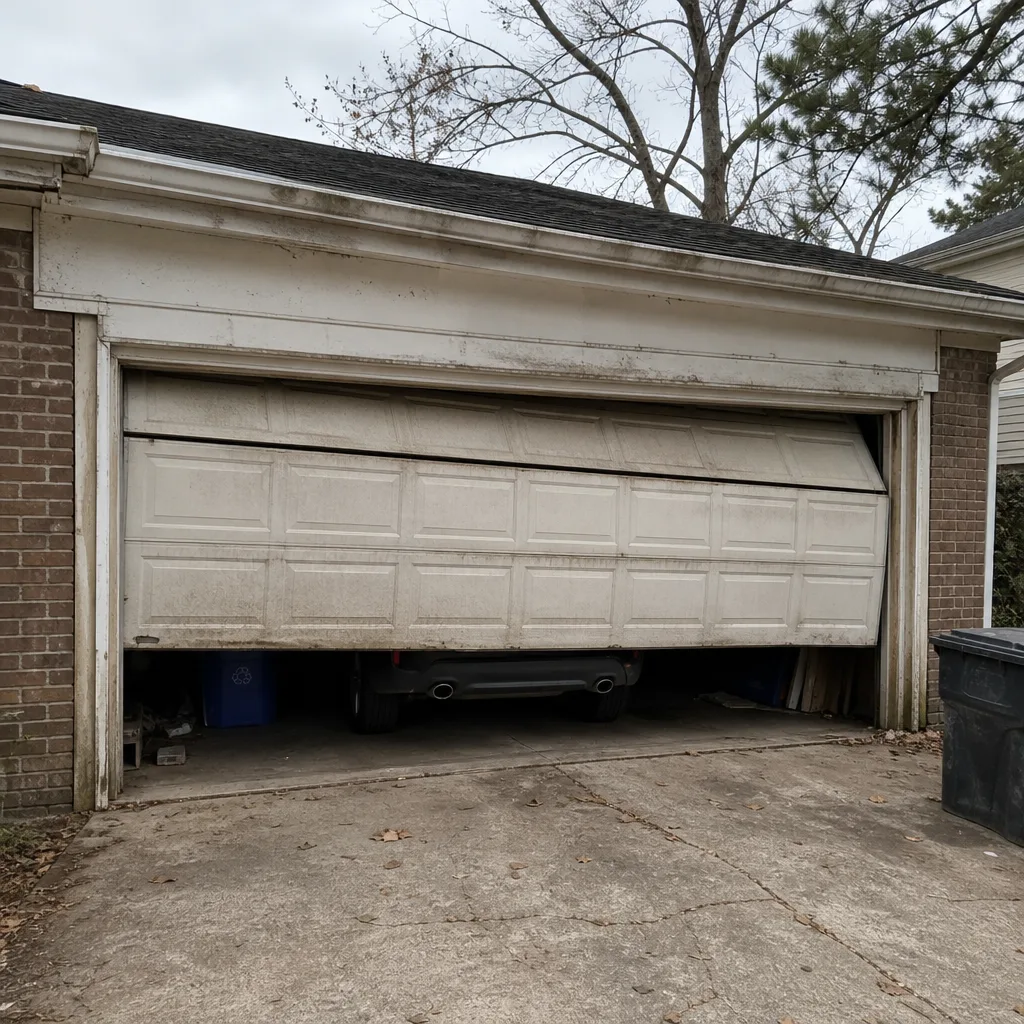
See the difference
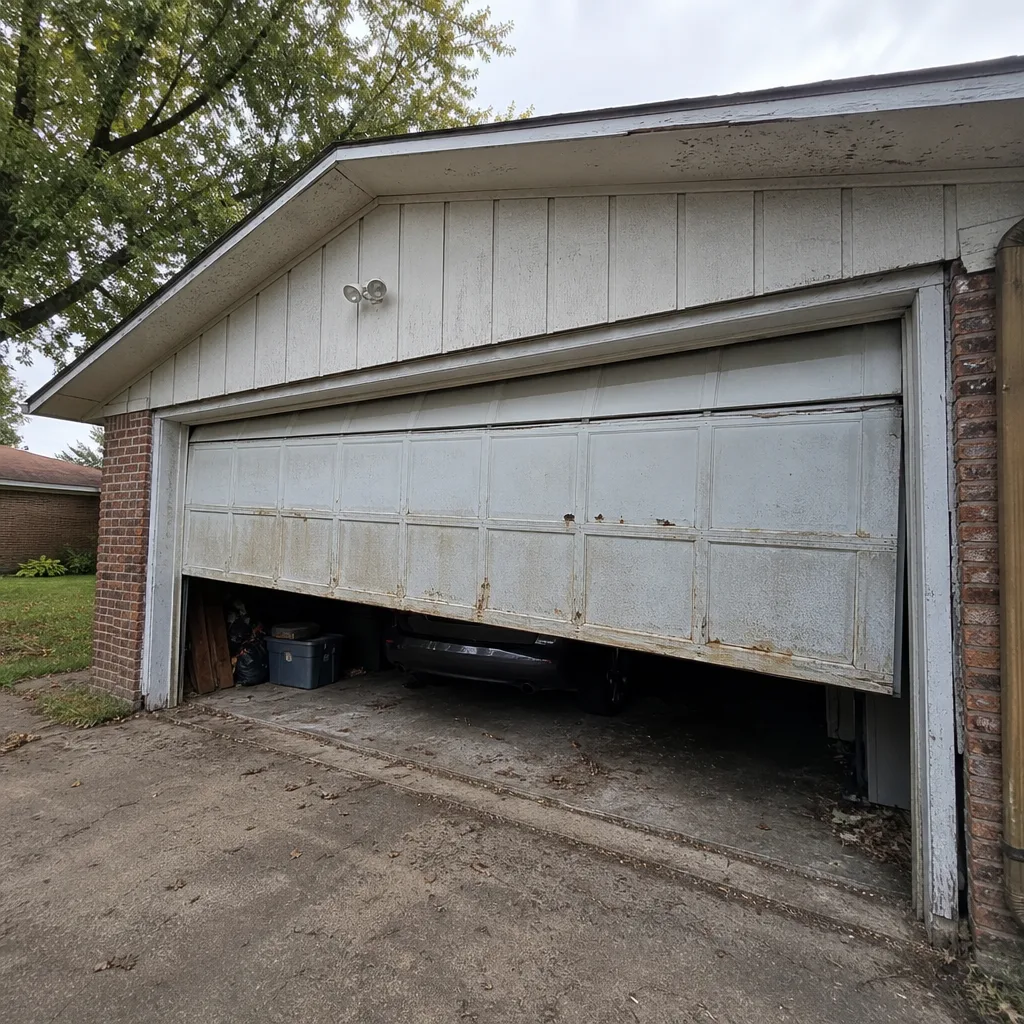 Before
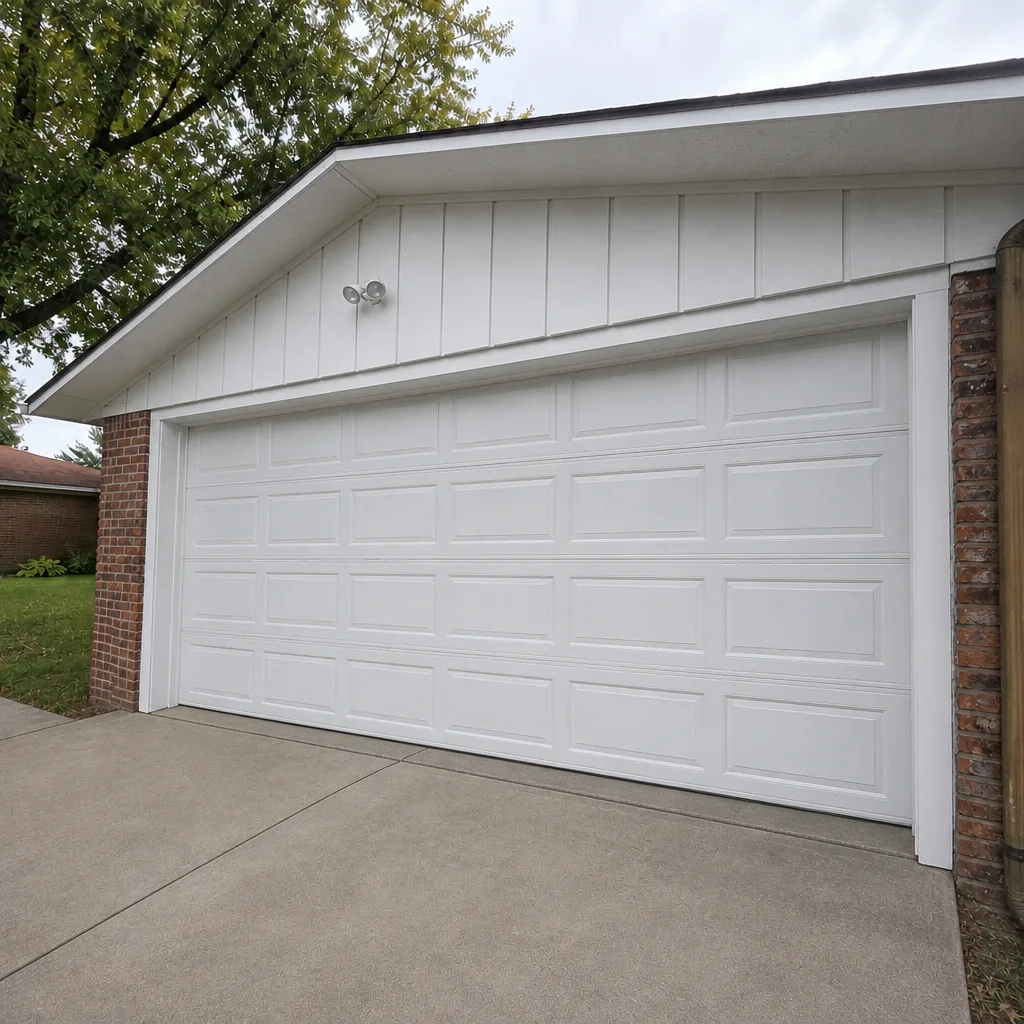 After
 Before
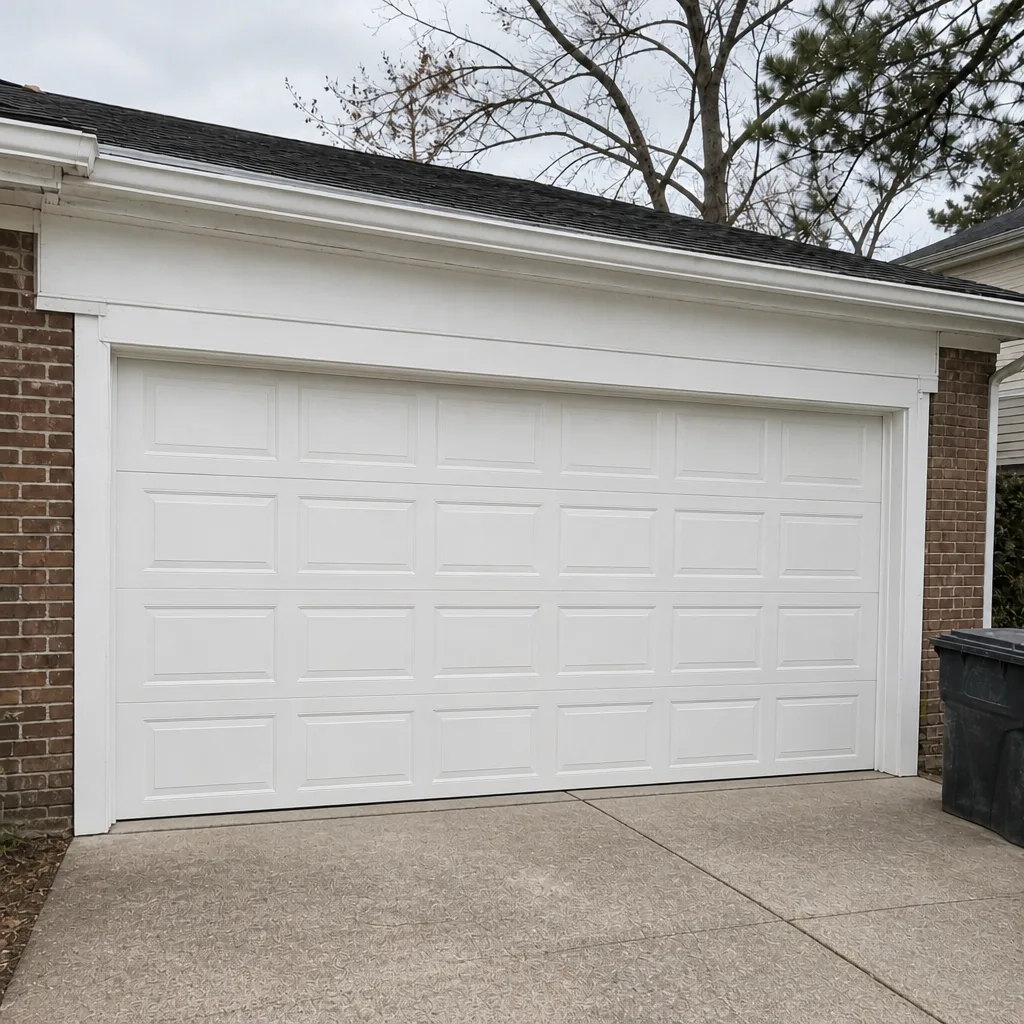 After
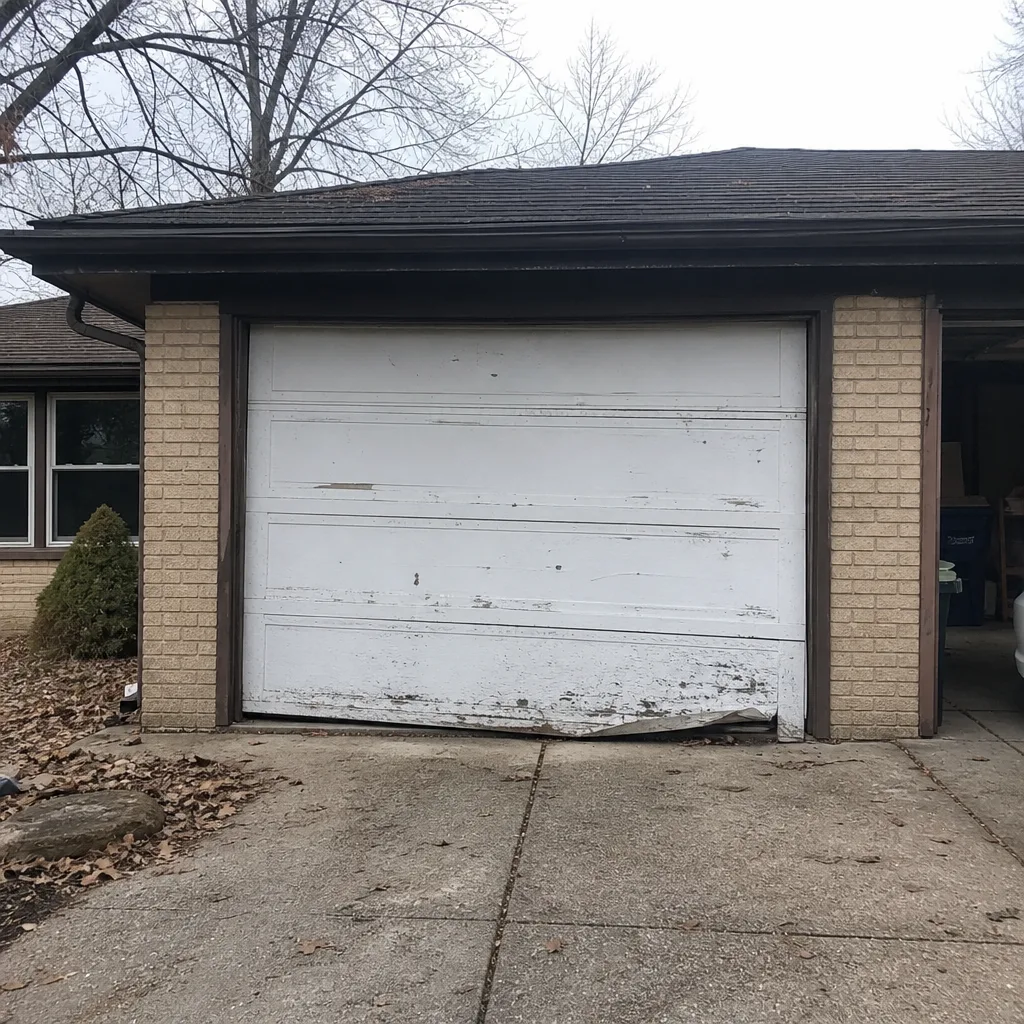 Before
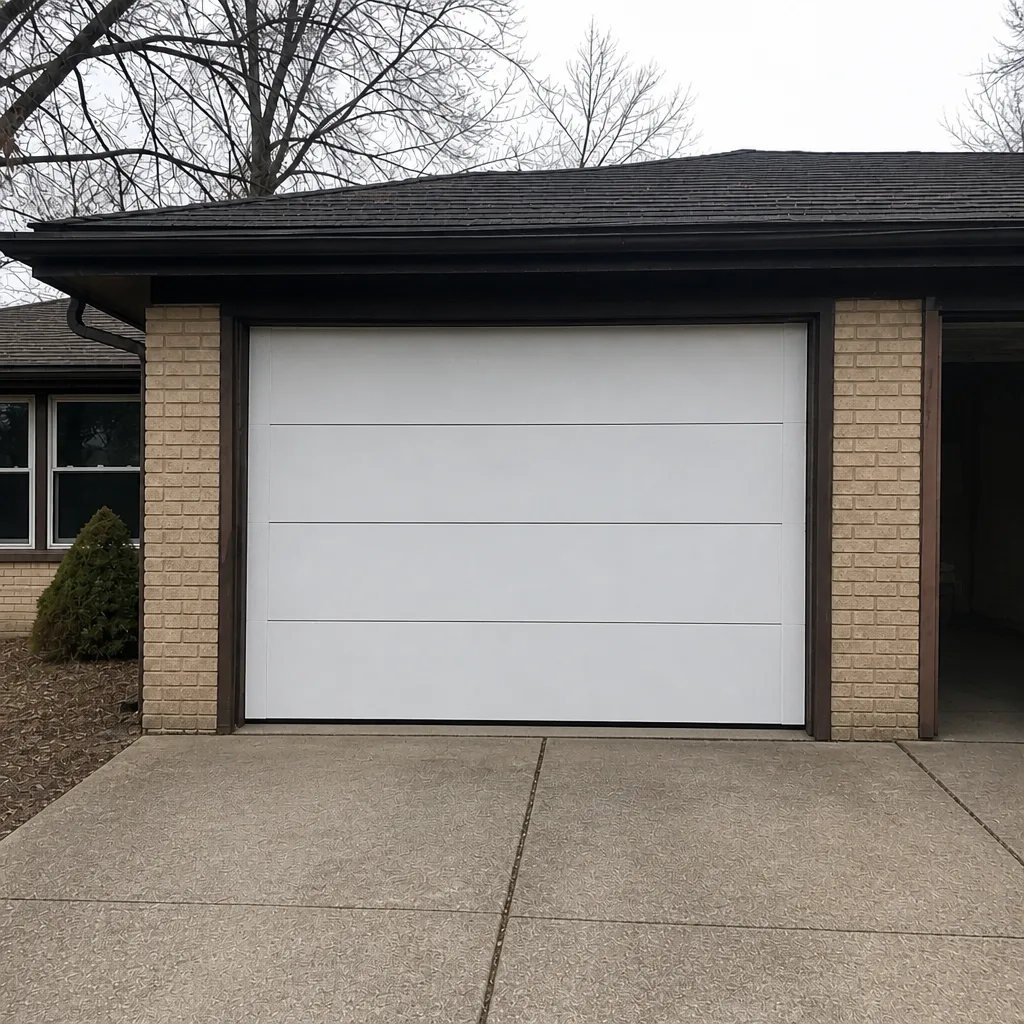 After
When to Call a Professional
Some situations need a specialist – and it’s worth being blunt about which. A broken torsion spring, a cable off its drum, a sagging door, a damaged bottom section, a door that reverses unpredictably, an opener that hums without moving – the list of jobs that belong to a trained technician is longer than the list of jobs that don’t. Spring and cable systems store a lot of energy, and a mistake there is not a small one. If a person or vehicle is trapped behind a door that won’t move, tell us that first on the call.
Garage Door Repair Lindenwood Park offers free estimates in Lindenwood Park – call (866) 566-2905. Our technicians have up to 15 years of experience, and we work on the brands most common in this area. For full door replacement or a new install, start with garage door installation.
Frequently Asked Questions
Secure the opening first, then call a specialist. Park a vehicle across the doorway or brace a temporary board behind the opening, keep everyone clear of the door, and call (866) 566-2905. Treat it as a security emergency first – an open garage is exposed – and as a mechanical problem second. Don’t force the door down by hand, because a door that’s hanging on a failed spring can come down hard.
No, not on a door with a broken spring or a visibly damaged cable. The manual release only disconnects the opener; it does not remove the spring tension, and pulling it on a dead-spring door can let the full weight of the door come down. Use the release only when the door is level, fully closed or open, and lifts by hand with controllable effort. When in doubt, call instead.
A door that’s sagging on one side, dropping back down when lifted, has a visible gap in the spring or a slack cable, or won’t stay up is unstable and should not be handled. Clear everyone from under it, keep the area clear, and call a technician. High-tension springs and cables store a lot of energy and can release without warning, so this is a hands-off category.
We answer 24/7. A call outside dispatch hours is booked into the next opening, Sunday through Friday, 7am to 7pm. If your door is open overnight, secure the opening with a physical barrier and we’ll get you scheduled for the next available window.
Have the door brand, the opener brand and model, and a one-line symptom description ready – whether the door is open or closed, and whether it’s level or sagging. Also tell us in the first sentence if a person or vehicle is trapped. Door and opener brand alone tells us whether we’re dealing with a spring and cable or an opener issue, and what parts to bring.
The price is set per job by the written estimate, which we agree with you before any work starts. We give free estimates and quote before we begin, so there’s no surprise on the invoice. Call (866) 566-2905 for an exact quote.
The Bottom Line
Garage door emergencies in Lindenwood Park come down to one judgment call made in the first minute: is this a security emergency or an access emergency? A door stuck open needs a physical barrier and a call, not a heroic repair attempt. A door stuck closed needs a careful manual release only when the door is level and lifts by hand. Anything sagging, unstable, or with visible spring and cable damage is hands-off and is a job for a specialist. Keep the door brand, opener model, and a symptom description ready, know where the manual release is and when not to use it, and the whole category gets a lot smaller.
Call (866) 566-2905. We answer 24/7. Fast dispatch from 7am to 7pm, Sunday through Friday, closed Saturday. Free estimates, and the price is agreed before any work starts.
Written by the team at Garage Door Repair Lindenwood Park.