
Last updated November 21, 2026
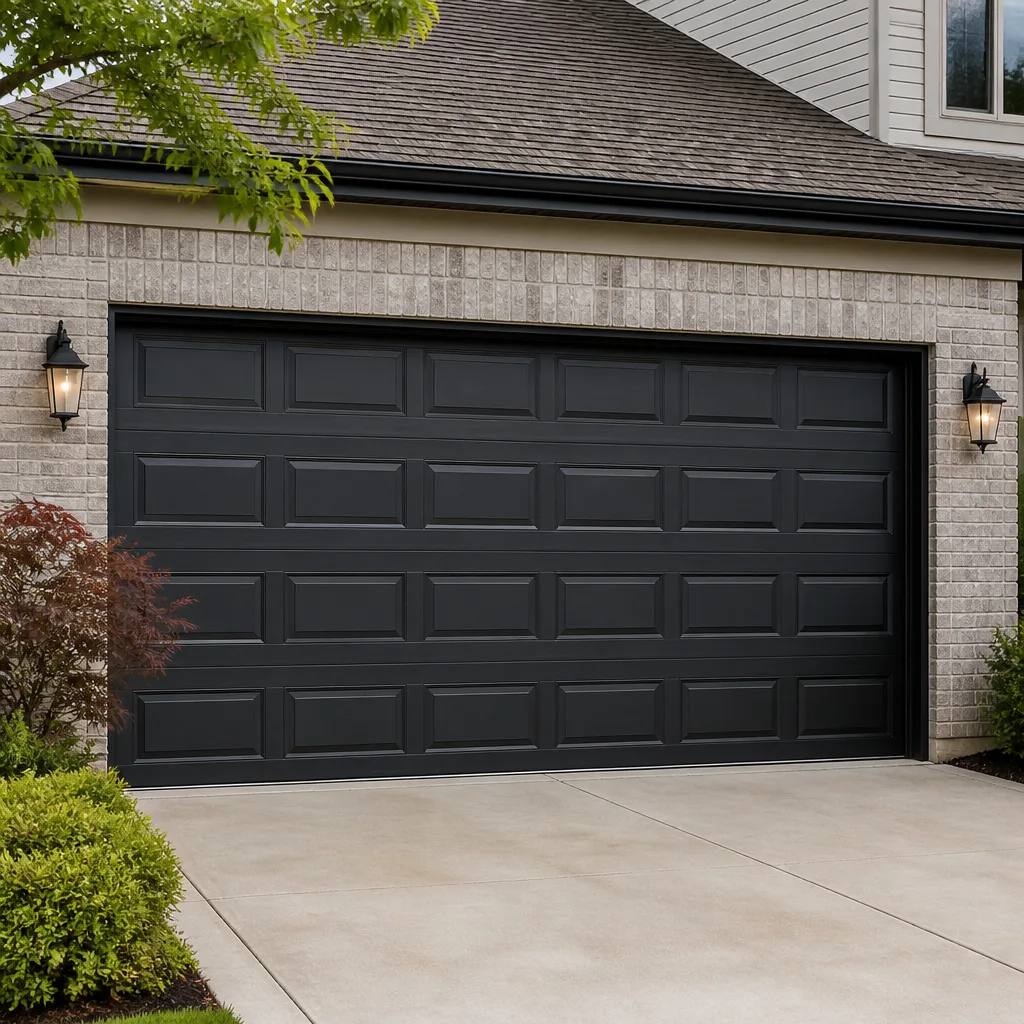 Raised-panel steel
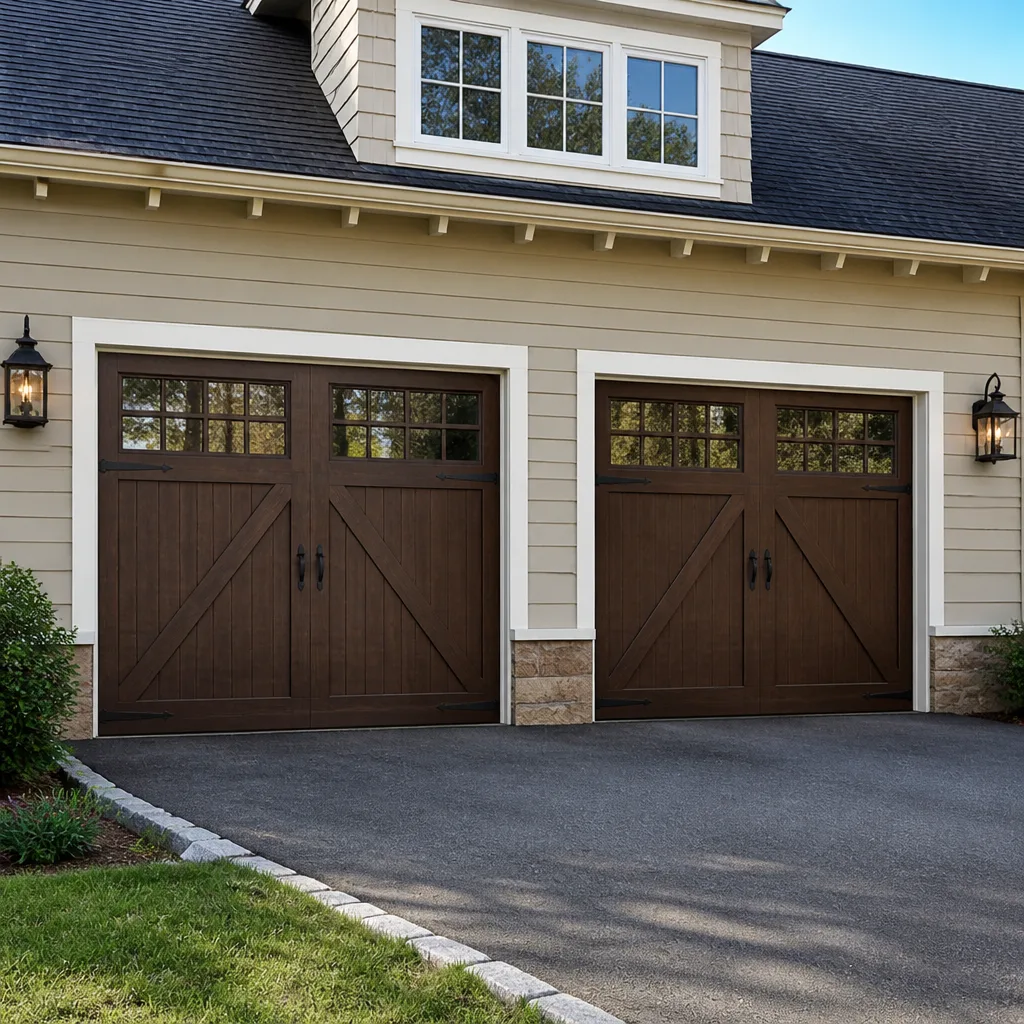 Carriage house
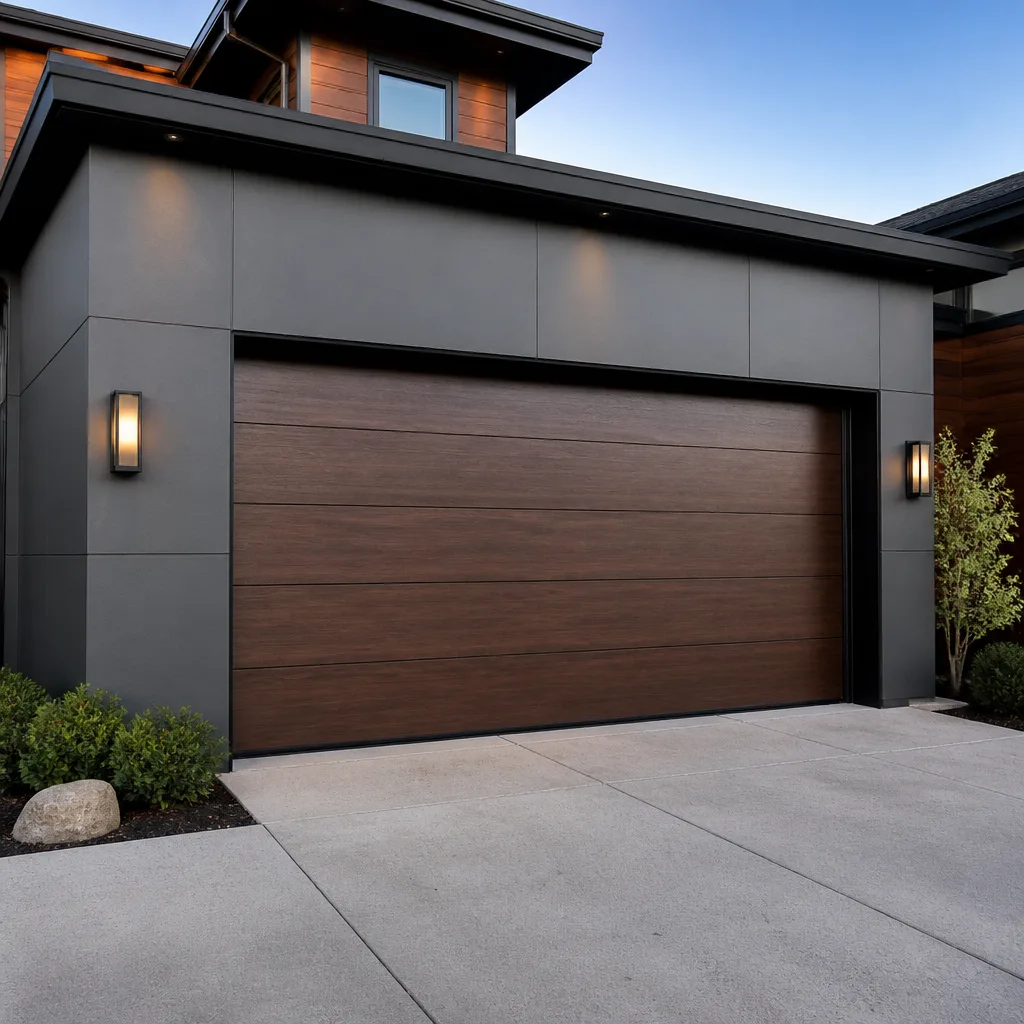 Modern flush
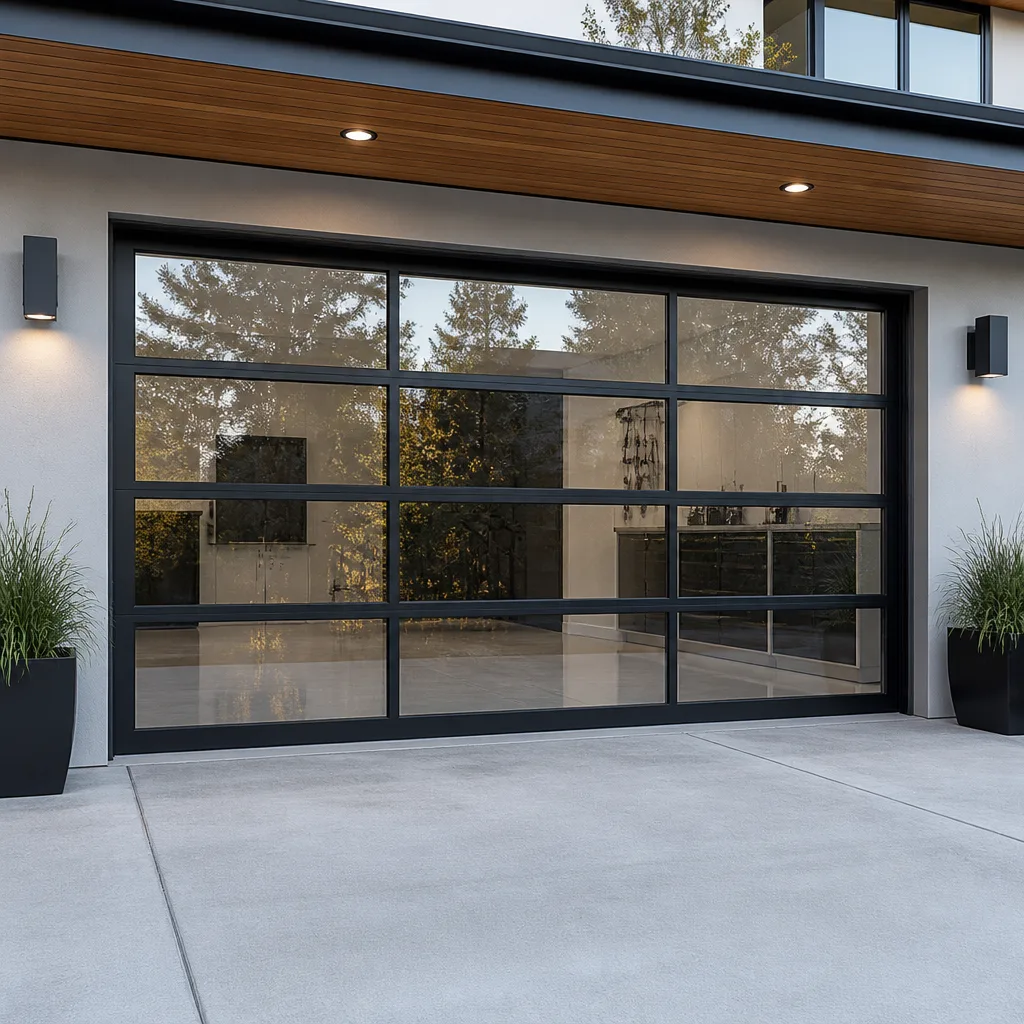 Full-view glass
 LiftMaster openers
 Chamberlain openers
Full 25-point door and opener safety check with every visit - springs, cables, rollers, tracks, and your LiftMaster or Chamberlain opener included
You get a price before we start. It does not change when the pro arrives.
Get your free estimateGarage Door Warning Signs: A Lindenwood Park Homeowner’s Reference Guide
A garage door that hesitates for two seconds before it starts to move is not “working fine.” In our experience, that pause is usually a torsion spring that has lost tension, and the opener is making up the difference. Keep letting it compensate and the motor takes the strain instead – a small spring fix turns into an opener replacement. Most homeowners wait for the door to stop working entirely before they call. This guide is built the other way around: the quiet, early signals that show up weeks before a failure, described clearly enough that you can spot them from your own driveway in Lindenwood Park. We cover what each sound means, the visual checks that reveal imbalance, and the one test you can do twice a year that exposes spring wear before it strands you.
Quick Answer
The most reliable garage door warning signs are changes in how the door sounds, moves and settles: a hesitation before it lifts, a grinding or squealing noise, a door that looks crooked in the opening, and an opener that strains or reverses on its own. In Lindenwood Park, where doors face the same freeze-and-thaw swing as the rest of the metro, these signals usually build slowly across a season rather than appearing overnight. Catch them at the small-repair stage and you avoid the emergency stage where a snapped spring or a dropped cable leaves the door stuck, sometimes with a car trapped inside.
Styles & brands we work with
- Raised-panel steel
- Carriage house
- Modern flush
- Full-view glass
- LiftMaster openers
- Chamberlain openers
Table of Contents
- Why Garage Door Problems Announce Themselves Before They Fail
- Auditory Warning Signs: What Each Sound Tells You
- Visual Asymmetry Checks You Can Do From the Driveway
- Opener Behavior Changes That Point to Mechanical Load, Not the Opener
- The Manual Balance Test Every Homeowner Should Do Twice a Year
- Seasonal Adjustment vs. a Door Going Out of Balance
- The Two Parts You Should Never Repair Yourself
- When to Call a Professional
Why Garage Door Problems Announce Themselves Before They Fail
A garage door is a balanced system held under constant tension. The torsion spring above the door carries most of the weight, the opener only supplies a push, and the cables, rollers and hinges keep everything tracking straight. When one part starts to wear, the system wobbles before it breaks. The spring loses a little tension, so the opener works a little harder. A roller flat-spots, so the track gets a little more drag. These early changes are small, but they’re measurable, and they show up as the little behaviors most homeowners tune out.
That’s why the cheapest garage door repair is almost always the one you do early. A worn roller or a stretched cable is a quick fix. A cable that finally snaps under load can whip, and a spring that breaks under tension is a genuinely dangerous event – not something to be standing under. The difference between a modest repair and a serious problem is usually how long the subtle warning signs were ignored, not how bad the failure was.
We work on garage doors every day and see the same pattern in Lindenwood Park: doors that were “fine” for months announce a problem with a two-second hesitation, a new grind, or a crooked line across the top. Learning to read those signals is the whole point of this guide. If something already sounds or looks wrong, our Garage Door Repair Lindenwood Park page covers how a repair visit works, and you can always call to talk it through before anything fails.
Key Takeaways
- Garage doors almost always give warning before they fail; the signals are subtle, not dramatic.
- Most early symptoms point to spring tension, cable balance or roller wear, not the opener itself.
- A door that hesitates, grinds or looks crooked is telling you something specific; this guide translates it.
- Early repairs are cheaper and safer than emergency ones; the two parts you must never touch are the springs and cables.
- Our technicians have up to 15 years of experience and know the common brands by sight, including LiftMaster, Wayne Dalton and Raynor systems.
Auditory Warning Signs: What Each Sound Tells You
Noise is the earliest and most reliable signal a garage door gives you, because the sound changes as soon as a component starts to bind or slip. You don’t need to diagnose it yourself – you just need to notice that the sound is new or getting worse. Here’s how we break down the common sounds and what each one usually points to.
- Grinding. A low, rough grind as the door moves is usually metal-on-metal friction – dry or worn rollers, or track that’s out of alignment. Left alone, grinding wears the rollers flat and stresses the opener.
- Squealing or a high whine. Often a dry torsion spring, a dry hinge, or a roller bearing that’s lost its lubrication. Squealing is usually the easiest early fix, but it’s telling you something is running without protection.
- A sharp pop or bang. A single loud pop when the door starts to lift is a red flag – it can mean a torsion spring is at the end of its life, or a cable has slipped. Stop cycling the door and get it checked.
- A heavy thud. A thud as the door reaches the floor or the top of its travel usually points to the opener’s force limits being too high, or a door that’s out of balance and slamming into its stopping point.
- Rattling. Loose hinges, fasteners or panels. Usually minor, but rattling can shake a door out of alignment over time.
One thing worth knowing: the sound is often loudest on the coldest morning of a stretch, then quiets as the day warms. In Lindenwood Park, our winters swing above and below freezing, which thickens lubrication and stiffens the door one day and lets it run smooth the next. A door that only complains in cold weather is still complaining. If the grind or squeal persists for a week of use, it’s not the weather – it’s a part telling you it needs attention.
If the noise turns up along with sluggish movement, our garage door repair team can usually tell from the sound which system is at fault before we arrive. Bring the door’s brand if you know it – a LifdMaster opener and a Raynor door each have their own quirks, and knowing the make up front saves time.
Visual Asymmetry Checks You Can Do From the Driveway
You can spot most imbalance problems without touching anything, just by standing back and looking. Do these checks once a month – it takes about a minute and it’s the best early-warning system a homeowner has.
- Look at the gap at the bottom. Close the door and look across the bottom seal. A gap on one side and a tight seal on the other means the door is out of level or one cable has stretched.
- Check the horizontal line. With the door fully closed, does the line where the top panel meets the frame look perfectly horizontal? A slight tilt across the top is a classic sign of one spring or cable carrying more than its share.
- Watch the panels as the door closes. Panels should close straight and flush. A panel that lags on one side, or a door that racks slightly as it comes down, points to uneven tension.
- Inspect the cables. With the door closed, look at the cables running down each side above the bottom roller. You’re looking for fraying, kinks, or a cable that looks looser on one side. Do not touch them – just note what you see.
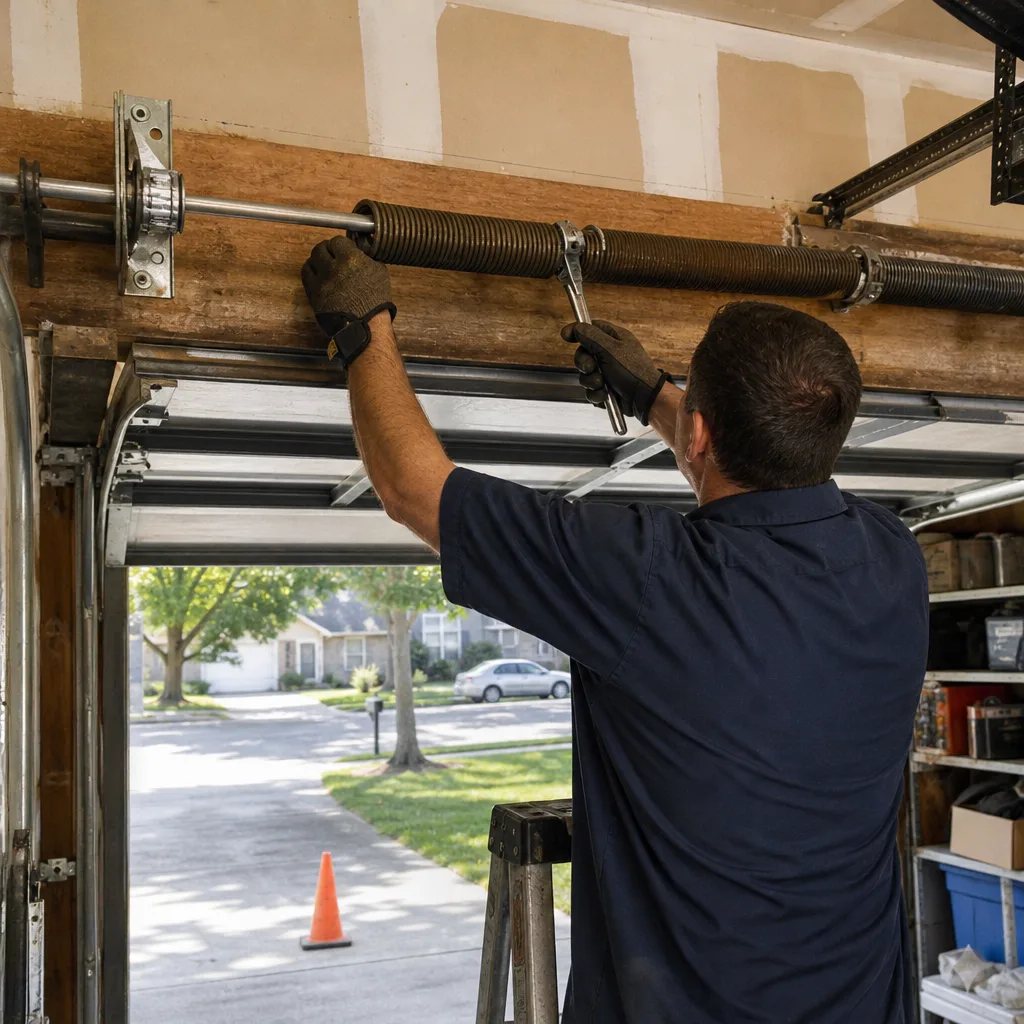
- Check the springs. Look at the torsion spring above the door. A thin gap in the coil, or a spring that looks visibly different from one side to the other on a two-spring setup, is worth a call.
- Look at the tracks. Step back and sight down each vertical track. A bend, a kink or a track that’s pulled away from the frame will drag the door and wear components fast.
None of these checks require you to climb on a ladder or reach under tension. That’s deliberate – the springs and cables are exactly the parts where a visual check is safe and a hands-on check is not. If you see asymmetry in Lindenwood Park, take a picture on your phone and call us; a photo of the door closed or the spring gives our technicians a real head start, whether it’s a garage door opener repair or a spring job.
Opener Behavior Changes That Point to Mechanical Load, Not the Opener
Homeowners tend to blame the opener when a door starts acting up, and the opener is usually the messenger, not the cause. LiftMaster, Chamberlain, Genie and Craftsman openers all have built-in force limits – sensors that measure how much resistance they meet and reverse or stop if it gets too high. Those limits are there to protect you. When they start tripping, it’s usually because the door is getting heavier to move, not because the opener is failing.
Watch for these behaviors, because they all point at mechanical load:
- Hesitation before the door moves. The opener runs for a beat before the door lifts. That’s a spring that has lost tension, so the motor is taking weight it wasn’t designed to carry.
- Strain sounds. The motor sounds labored or whines harder than usual, especially at the start of travel. That’s overload, and it wears the motor and the drive system.
- Reversing for no reason. If the door goes partway up and back down, or reverses on the way down with nothing in the way, the force limit is tripping. Sometimes it’s a misaligned safety sensor, but just as often it’s a door that’s binding.
- Slowing partway through travel. A door that runs at normal speed then slows means resistance is building somewhere along the track or rollers.
- Needing the remote pressed twice, or starting with a jolt. Both signal the opener is fighting a load it shouldn’t feel.
Here’s where a specialist makes a difference. If we call it wrong and replace an opener when the door was the problem, you’ve paid for an opener and still have a door that strains. We check the balance and the door mechanics first, then the opener. When the opener itself is the issue – a bad logic board, a failing sensor, a worn drive gear – we know the common brands, so there’s no learning curve with your LiftMaster or your Genie. If your opener is the problem, our garage door opener repair team can confirm it quickly.
The Manual Balance Test Every Homeowner Should Do Twice a Year
This is the single most useful test a homeowner can run. It tells you whether the springs are doing their job or whether the opener is quietly carrying the load. It’s a hands-only test – no tools, no ladder, no reaching near a spring. Do it twice a year, once as winter settles in and once when it breaks.
- Clear the way. Make sure the door is closed, the opener is disengaged by pulling the release handle (the red cord hanging from the carriage), and nothing is in the door’s path.
- Lift the door by hand. With the opener disengaged, raise the door to about waist height – half open. Use the bottom of the door and lift steadily.
- Let go and watch. A properly balanced door should stay roughly where you let it go. It might drift a few inches, but it should not fall or slam closed.
- Check the other half. Repeat by lifting the door to shoulder height and releasing. Again, it should hold its position.
- Read the result. A door that drops quickly, or won’t stay up at all, means the springs have lost tension; the opener has been making up the difference and is under more strain than it should be. A door that lifts too easily or sits high and won’t come down means the springs are overtensioned.
A door that fails this test is a door whose springs need attention. A door that passes it but still grinds or hesitates may have mechanical issues elsewhere – rollers, track, or cables. Either way, the test tells you what to watch, and it’s the test we run first when we arrive.
What we’ve seen in Lindenwood Park is that this test takes on more meaning around the first cold snap. Springs soften and lose tension faster in a stretch of freeze-and-thaw, and the difference between a door that held its position in October and one that drops in January is exactly the kind of early spring wear that shows up before a break. If your door fails the test, that’s a garage door repair conversation, not a DIY project – the fix is spring work.
Seasonal Adjustment vs. a Door Going Out of Balance
Garage doors do respond to the seasons, and that response is normal within limits. The trick is telling a small adjustment to the weather apart from a door that’s genuinely losing balance. Here’s the distinction we use.
- Normal seasonal behavior. The door runs slightly stiffer on the coldest mornings, the seal at the bottom settles differently, and the opener feels a little heavier for a day or two before it warms up. The door still closes flush, still has no visible gap at the bottom, and still passes the balance test.
- Out of balance. The door looks crooked, drops when you let go during the balance test, reverses on its own, or needs force limits adjusted more than once. The cold might make it worse, but the door is genuinely losing balance, and it will not correct itself.
The line between the two is the balance test and the visual checks. If the door passes both, it’s seasonal. If it fails either, it’s mechanical. The mistake homeowners make is assuming a door that’s only slightly worse is “just the weather” month after month. In our experience, if a door has been “slightly off” for more than a couple of weeks, it’s not seasonal anymore.
If you live in one of the older homes along the Lindenwood Park streets, you may also be dealing with a door and frame that settled long ago. The door may have been adjusted to fit years back, and small changes over the seasons add up. It’s worth having the balance checked if the door was already adjusted once to fit an older opening. When you’re ready to put a new door on an old opening, our garage door installation service starts with a proper measure of the existing frame, so the new door is sized to sit right rather than adjusted to fit.
The Two Parts You Should Never Repair Yourself
We’ll be direct, because this is the one place where a homeowner can genuinely hurt themselves. Torsion springs and the cables they’re attached to are under high tension. A spring that lets go while someone is working on it can cause serious injury, and a cable under load can snap with force you can’t predict. There is no safe way to “tighten” a spring or reattach a cable without the training and the right tools.
Warning signs that the springs or cables need a professional look:
- A visible gap in the torsion spring coil, or a spring that looks broken in two.
- The door suddenly becoming much heavier to lift, or refusing to stay up at all.
- A cable that has slipped off a drum, looks loose on one side, or shows fraying.
- A loud pop, followed by the door not moving or slamming shut.
- A door that sits crooked and won’t close flush after the opener disengaged.
If any of those are present, stop using the door and call. Don’t try to force it, don’t prop it up with a board, and don’t let the opener push against a jammed door – you’ll damage the opener on top of the spring. Spring repair is a named service for us for a reason: it’s the highest-risk, most technical garage door work there is, and it’s where a specialist earns their keep. We’ll diagnose what’s failed, explain what we’re replacing, and give you a written price before any work starts. If you’re comparing options, a free estimate from us is the place to begin.
Common Mistakes to Avoid
- Waiting for the door to stop working. The cheapest repair is the one you make on a warning sign, not a failure. A door that still opens is a door with options; a door that’s stranded a car is an emergency.
- Assuming the opener is the problem. Homeowners replace good openers all the time because the door was binding or a spring was worn. Check balance and the door mechanics before you price an opener.
- Tuning out a “harmless” noise. A grind or squeal that’s new this month will be a worn component next month. If the sound is new, it’s a signal, not ambient noise.
- Adjusting the force limits to compensate. Ratcheting up the opener’s force setting so a heavy door will move overrides the safety limit and hides the real problem. It’s a shortcut that costs more down the road.
- DIY spring or cable work. This is not an “easy fix” job. The tension in a garage door spring can cause serious injury, and a slipped cable is worse. Leave both to a trained technician.
- Ignoring the seasonal test in an old Lindenwood Park home. Older frames and openings settle, and doors adjusted to fit them need periodic balance checks. Skipping the twice-a-year test lets small wear turn into a break.
- Calling a generalist handyman for spring or opener work. A generalist may have tools, but garage doors are their own specialty with systems, brands and parts that are specific to this trade. The wrong fix on a spring is not worth the small savings.
When to Call a Professional
Call a professional when the door hesitates, grinds, squeals or looks crooked, and the signal has lasted more than a few days. Call sooner – today – if the door has popped loudly, dropped suddenly, is stuck open or stuck closed, has a visible broken spring or a loose cable, or won’t close flush. Those are the situations where a door can strand a car, fail to secure the house, or put someone at risk if they try to fix it themselves. If you’re simply not sure whether what you’re hearing is a problem, call and describe it; we’ll tell you what we think, and an estimate is free.
Garage Door Repair Lindenwood Park offers free estimates in Lindenwood Park – call (866) 566-2905. We answer 24/7, and fast dispatch runs from 7am to 7pm, Sunday through Friday (closed Saturday). Our technicians have up to 15 years of experience and work on the common brands every day, so there’s no guesswork on your system.
See the difference
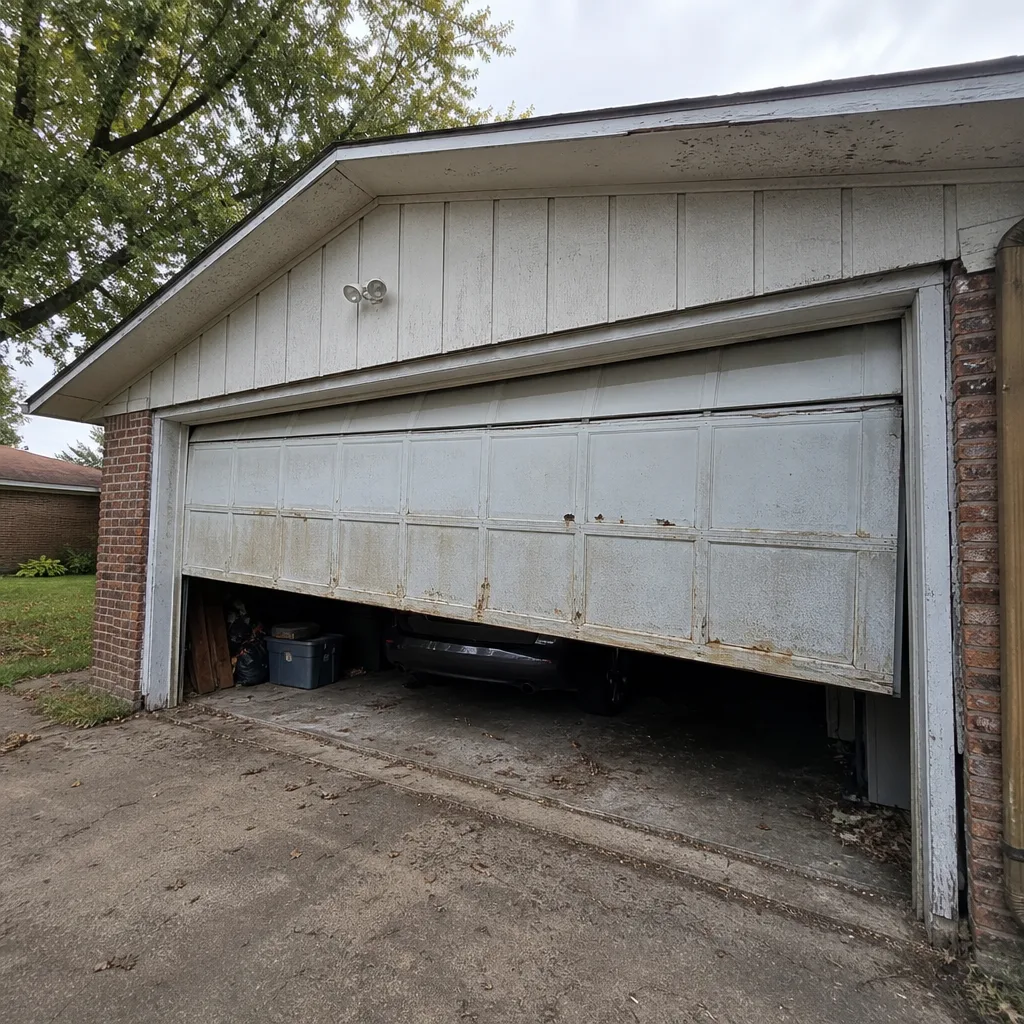 Before
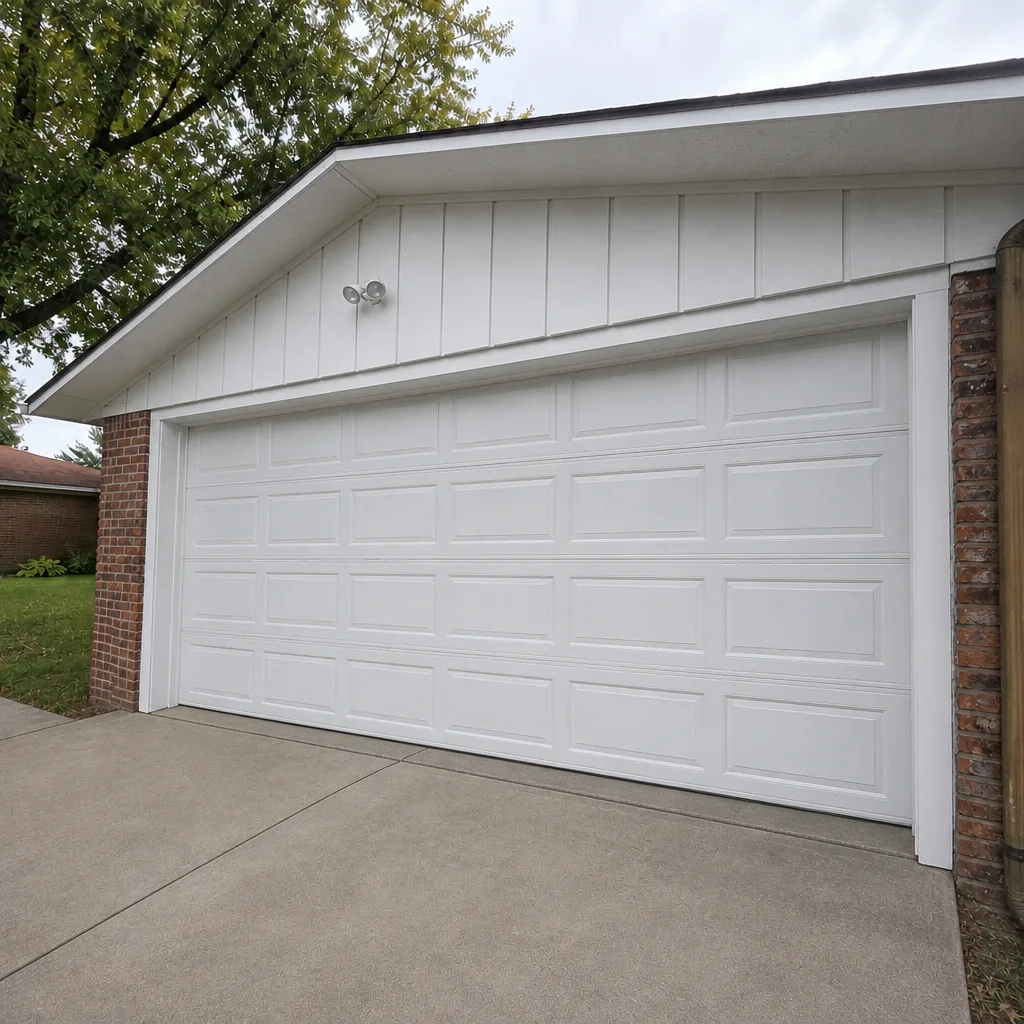 After
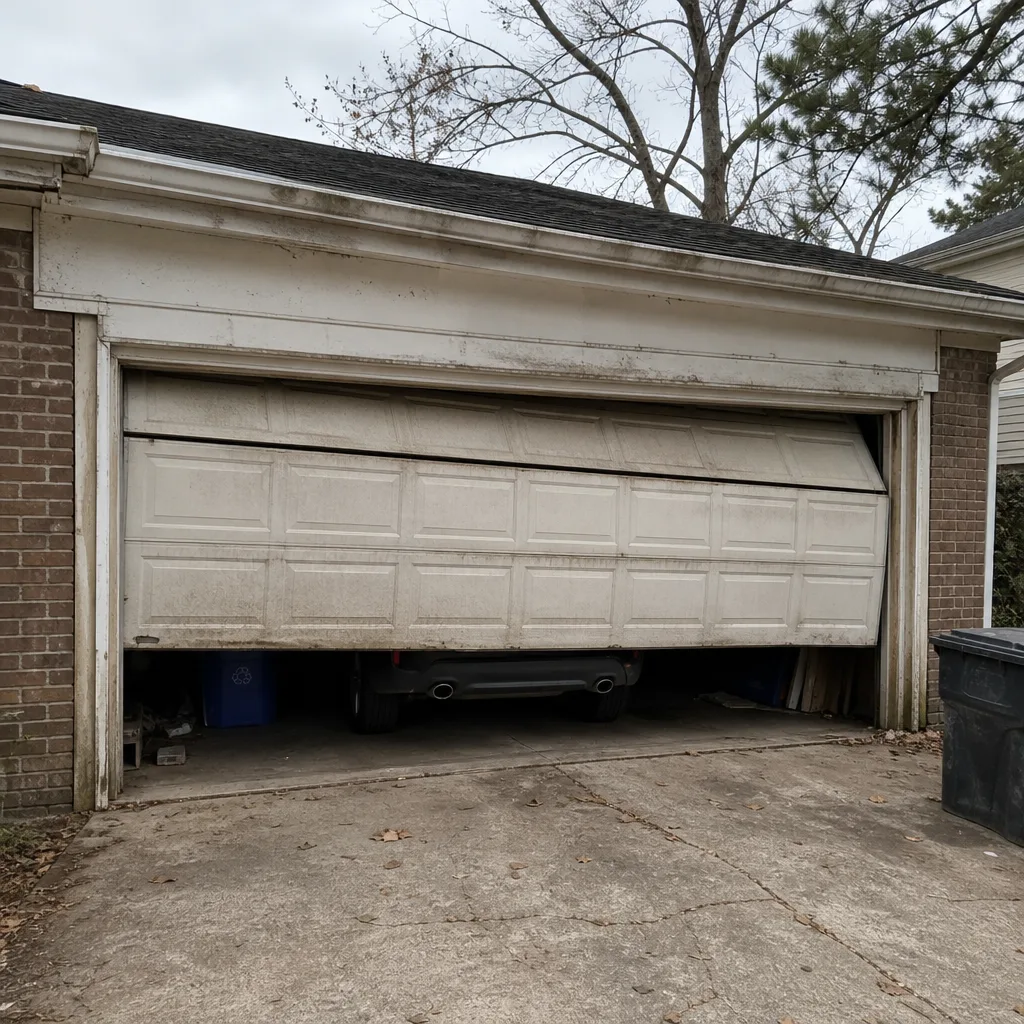 Before
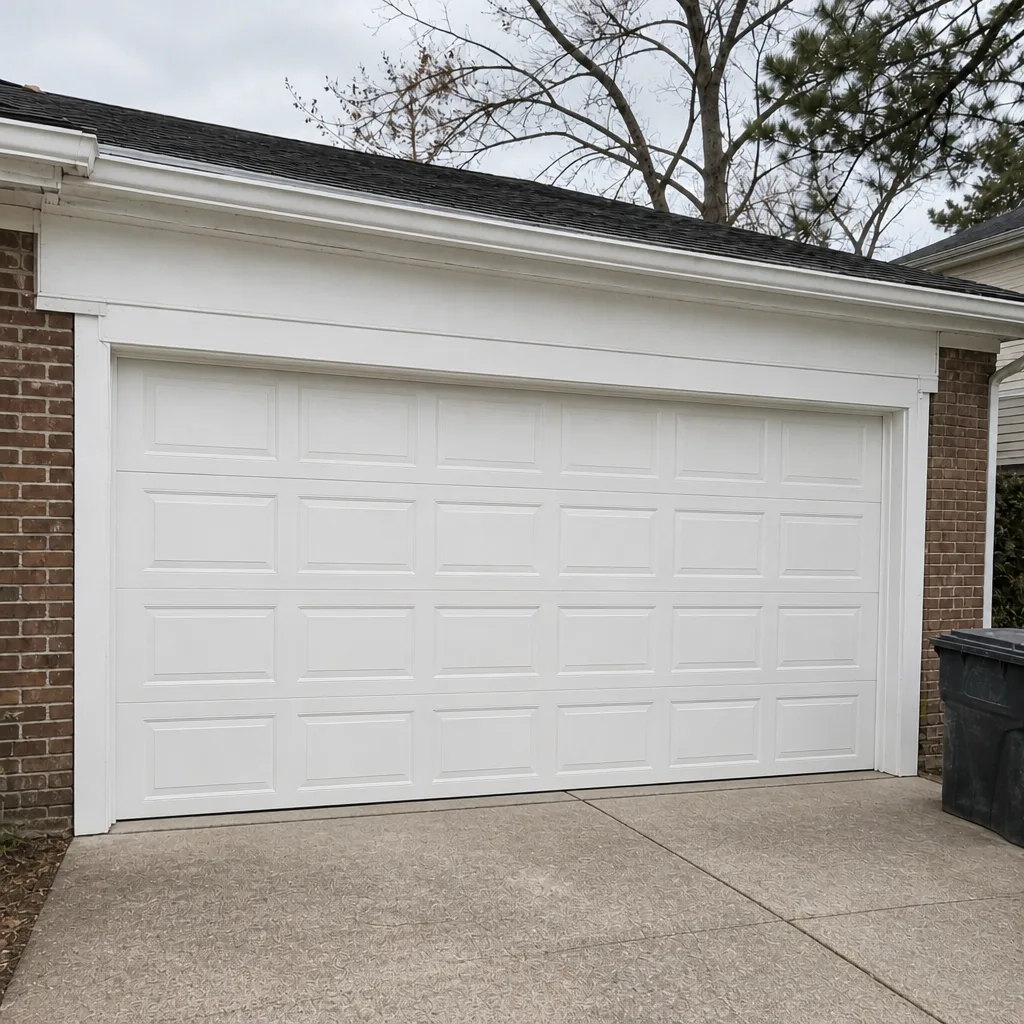 After
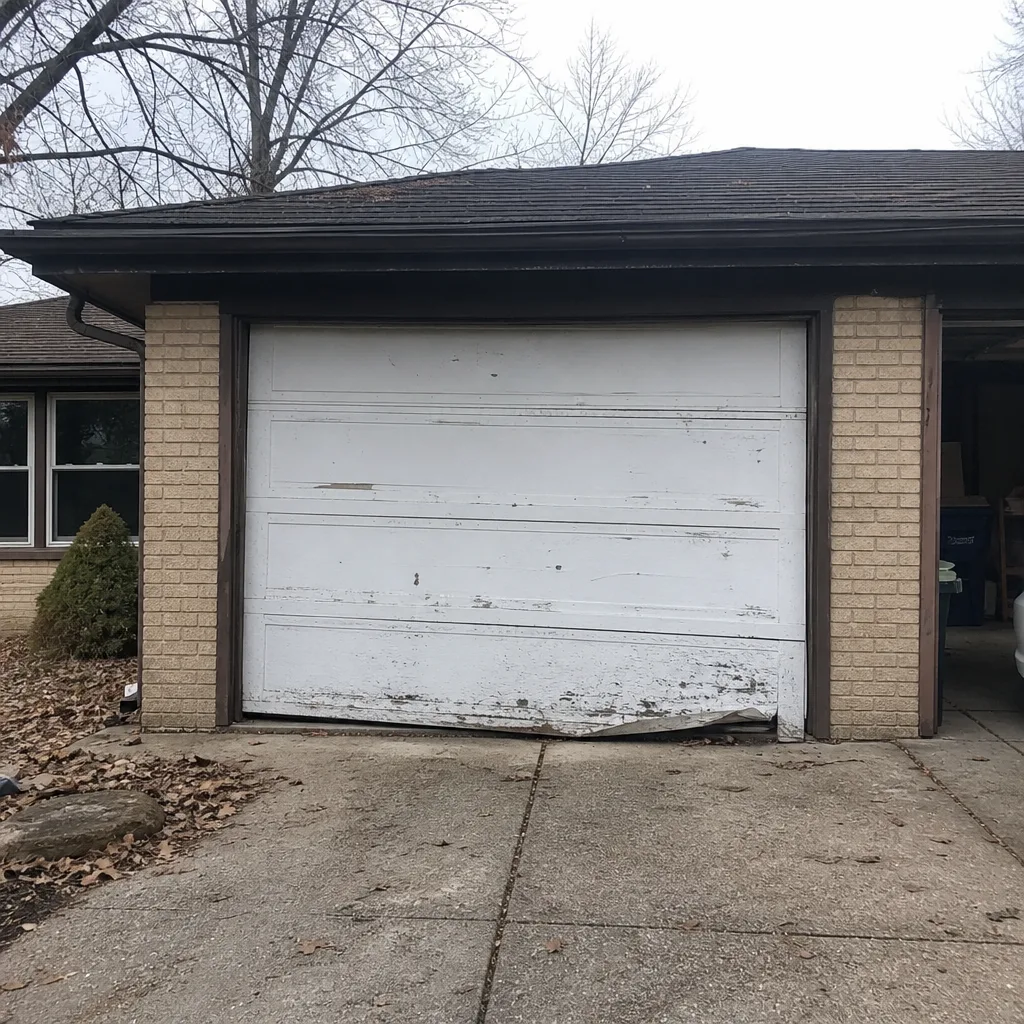 Before
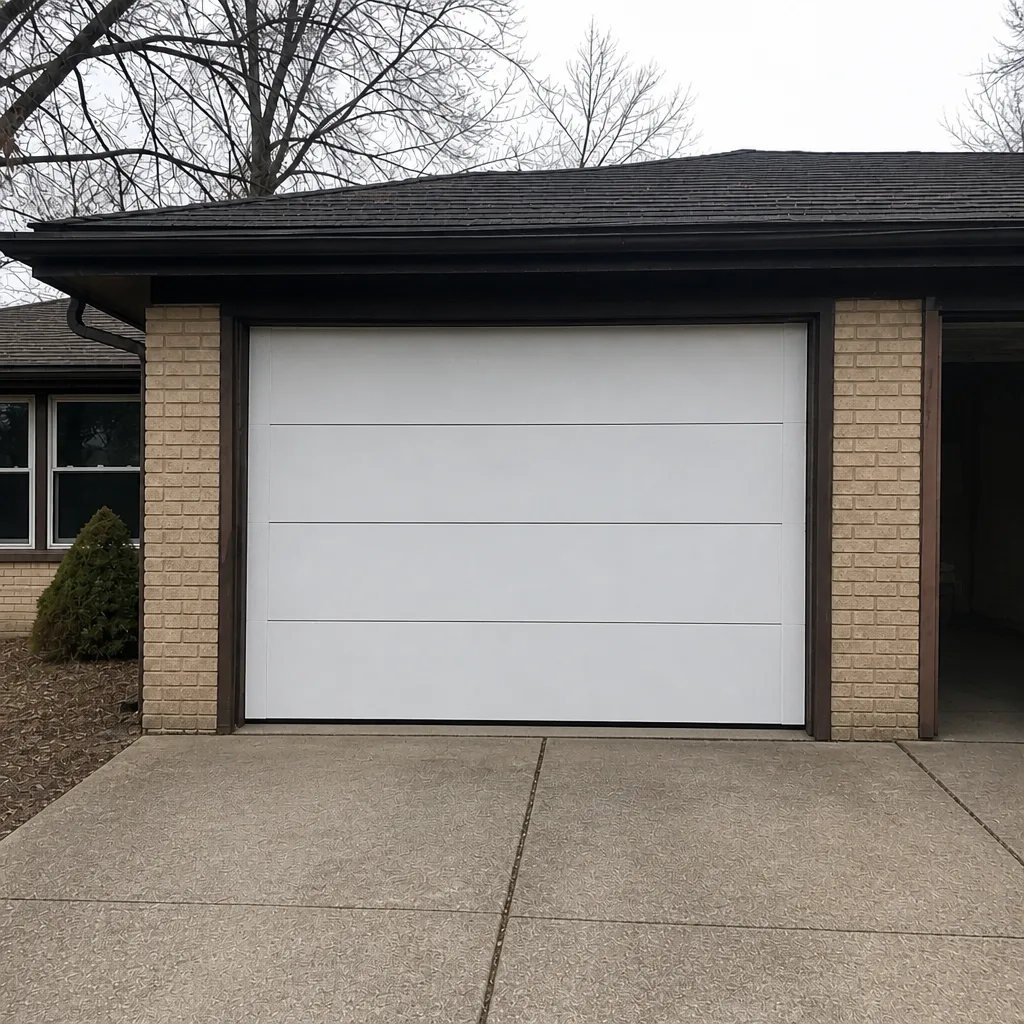 After
Frequently Asked Questions
The earliest signs are usually a hesitation before the door moves, a new grinding or squealing sound, and a door that doesn’t close flush. A door that hesitates is usually telling you the springs have lost tension and the opener is compensating. Call (866) 566-2905 for a free estimate if you notice any of these.
A hesitation means the opener is doing more work than it should, usually because a spring has lost tension. It isn’t an emergency, but left alone, the strain wears the opener motor, and a motor replacement costs far more than a spring fix. We’d rather look at it now than after the motor gives out. Call us for an estimate.
Twice a year – once as the cold sets in and once when it breaks. The balance test (disengage the opener, lift the door halfway, and see if it holds) takes about a minute and reveals spring wear before it becomes a failure. If the door drops when you let go, that’s a call to (866) 566-2905.
Cold weather thickens lubrication and stiffens the door, so a worn component that’s already complaining gets louder. A door that only grinds or squeals for a few cold days and then quiets is often just seasonal – but a door that stays noisy for a week or more of use needs a look. Call (866) 566-2905 and describe the sound.
No. Torsion springs and cables are under high tension, and a spring that releases while someone is working on it can cause serious injury. A slipped cable can snap with unpredictable force. This is exactly the repair a trained garage door technician should handle. Call (866) 566-2905 for a free estimate.
Usually the door. An opener reverses when it hits its force limit, which means the door is binding, out of balance, or meeting too much resistance. Sometimes it’s a misaligned safety sensor, but often it’s a mechanical load problem. We check the door first, then the opener. Call (866) 566-2905 for a free estimate.
The Bottom Line
Garage doors rarely fail without warning. They hesitate, grind, squeal, lean crooked and drop in the balance test weeks before they stop working. The homeowners who catch those signals save themselves the emergency repair and the risk of a dangerous broken spring. Run the driveway checks once a month, do the balance test twice a year, and treat new sounds as information rather than background noise. If a warning sign is sticking around, that’s not something to sit with – it’s a free estimate. Garage Door Repair Lindenwood Park works on the common brands, has parts on hand for the everyday fixes, and knows your system before we arrive. Call (866) 566-2905 for a free estimate, and we’ll take it from there.
Written by the team at Garage Door Repair Lindenwood Park.